
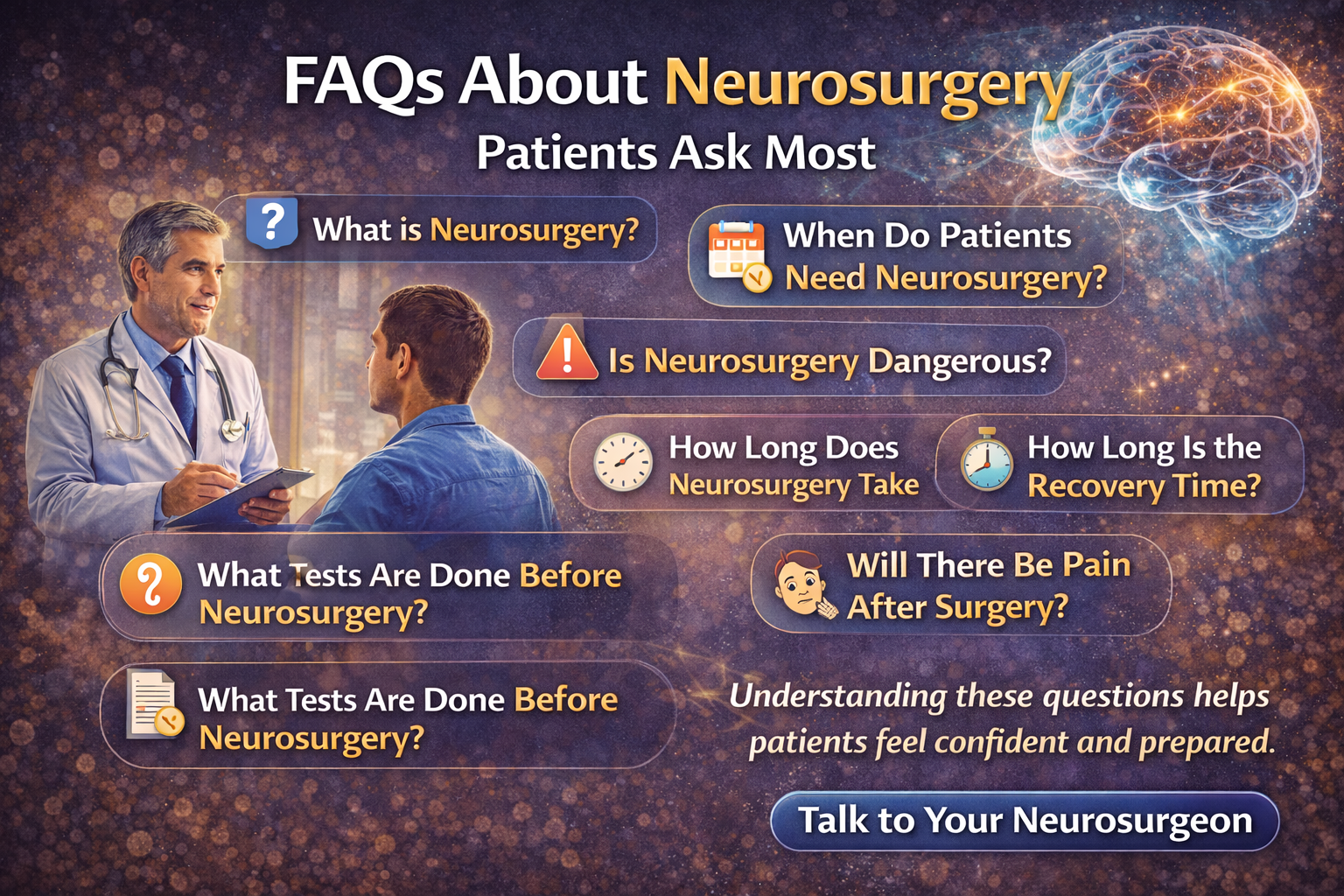
Neurosurgery is a specialized field of medicine that focuses on the diagnosis and treatment of disorders affecting the brain, spine, and nervous system. Many patients feel anxious or confused when they hear they might need neurosurgery. Understanding the procedure and knowing the answers to common questions can help reduce fear and make the process clearer.
In this article, we will answer some of the most frequently asked questions about neurosurgery.
1. What Is Neurosurgery?
Neurosurgery is a medical specialty that deals with surgical treatment of problems related to the brain, spinal cord, and nerves. A neurosurgeon treats conditions such as brain tumors, spinal disorders, nerve injuries, and head trauma.
2. When Do Patients Need Neurosurgery?
A patient may need neurosurgery if they have conditions such as:
-
Brain tumors
-
Spinal cord injuries
-
Brain hemorrhage or stroke
-
Epilepsy that cannot be controlled with medication
-
Nerve compression or chronic nerve pain
Doctors usually recommend surgery only when other treatments like medicines or therapy do not work
3. Is Neurosurgery Dangerous?
Like any surgical procedure, neurosurgery has risks. However, modern technology, advanced surgical tools, and experienced neurosurgeons have made these procedures much safer than before. Doctors carefully evaluate each patient before recommending surgery.
4. How Long Does Neurosurgery Take?
The duration of neurosurgery depends on the type of condition being treated. Some surgeries may take 2–3 hours, while complex procedures can take 6 hours or more.
5. How Long Is the Recovery Time?
Recovery time varies depending on the surgery and the patient’s health.
-
Minor procedures: a few days to weeks
-
Major brain or spine surgeries: several weeks to a few months
Doctors often recommend physical therapy or rehabilitation for faster recovery.
6. Will There Be Pain After Surgery?
Patients may experience mild to moderate pain after surgery, but doctors provide medications to manage it. Most patients report that the pain gradually decreases as they heal.
7. What Tests Are Done Before Neurosurgery?
Before surgery, doctors usually perform several tests such as:
-
MRI scans
-
CT scans
-
Blood tests
-
Neurological examinations
These tests help the surgeon understand the exact condition and plan the procedure safely.
8. Can Neurosurgery Cure Neurological Problems?
In many cases, neurosurgery can significantly improve or completely cure certain conditions. However, the outcome depends on the type of disease, its severity, and how early it is treated.
Conclusion
Neurosurgery may sound intimidating, but it plays a crucial role in treating serious neurological conditions. By understanding the procedure and asking the right questions, patients can feel more confident and prepared for their treatment journey.
If you or a loved one is considering neurosurgery, always consult a qualified neurosurgeon to discuss the best treatment options.
