
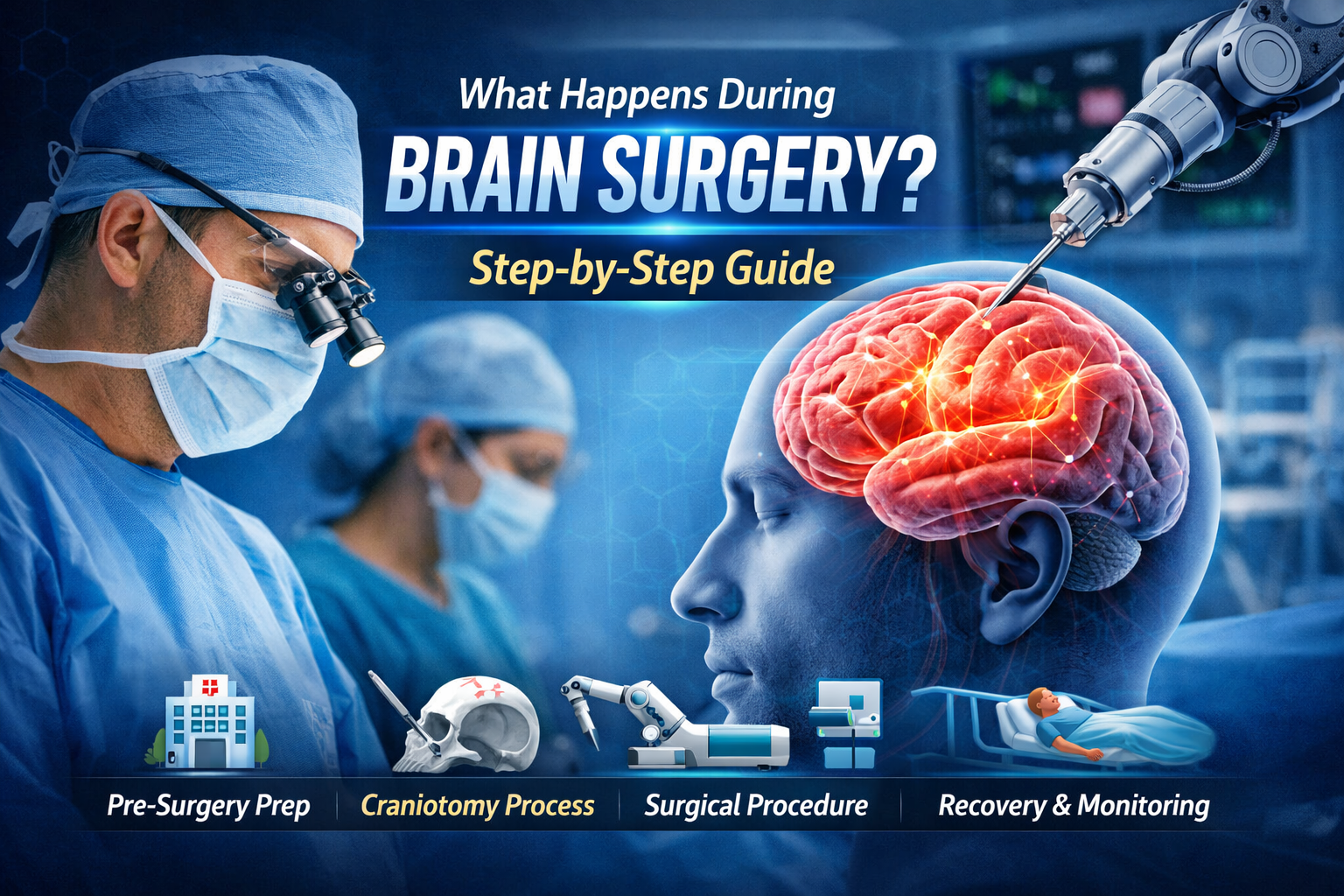
What Happens During Brain Surgery? Step-by-Step Guide
Brain surgery, also known as neurosurgery, is a highly specialized medical procedure performed to treat conditions affecting the brain, such as tumors, bleeding, injuries, or neurological disorders. While the idea of brain surgery may sound intimidating, modern technology and expert neurosurgeons have made it safer and more effective than ever.
In this guide, we’ll walk you through what actually happens during brain surgery—step by step.
🏥 1. Pre-Surgery Preparation
Before the surgery, patients go through detailed evaluations, including:
- MRI or CT scans to locate the problem
- Blood tests and health assessments
- Consultation with the neurosurgeon and anesthesiologist
The doctor explains the procedure, risks, and expected outcomes. Patients are usually asked to avoid food or drink for several hours before surgery.
2. Anesthesia Administration
On the day of surgery:
- The patient is taken to the operating room
- General anesthesia is given to ensure the patient is unconscious and pain-free
In some cases (like certain brain tumor surgeries), awake brain surgery may be performed so doctors can monitor brain functions in real time.
🔪 3. Making the Incision (Craniotomy)
The surgeon:
- Shaves and cleans a small area of the scalp
- Makes an incision (cut) in the scalp
- Removes a small section of the skull (called a bone flap)
This process is known as a craniotomy, which allows access to the brain.
🧠 4. Performing the Surgery
This is the most critical step. Depending on the condition, the neurosurgeon may:
- Remove a brain tumor
- Repair blood vessels
- Stop bleeding
- Treat brain injury or swelling
Advanced tools like:
- Surgical microscopes
- Navigation systems (like GPS for the brain)
- Laser or robotic assistance
are often used to ensure precision and safety.
. Closing the Surgery
Once the procedure is complete:
- The bone flap is placed back and secured
- The scalp is stitched or stapled closed
- A bandage is applied to protect the area
⏳ 6. Recovery & Monitoring
After surgery:
- The patient is moved to the ICU for close monitoring
- Doctors check brain function, vital signs, and recovery progress
- Hospital stay may last a few days to weeks depending on the condition
🌿 7. Rehabilitation & Healing
Recovery doesn’t end at the hospital. Patients may need:
- Physical therapy
- Speech therapy
- Regular follow-ups
Full recovery can take weeks to months, depending on the complexity of the surgery.
⚠️ Risks & Safety
Like any major surgery, brain surgery carries some risks, such as:
- Infection
- Bleeding
- Swelling
- Temporary or permanent neurological changes
However, with experienced neurosurgeons and modern equipment, success rates have significantly improved.
Final Thoughts
Brain surgery may seem overwhelming, but understanding the process can ease fear and build confidence. With the right medical team and advanced technology, many patients successfully recover and return to normal life.
If you or a loved one is experiencing neurological symptoms, don’t delay seeking expert medical advice. Early diagnosis can make a life-saving difference.
