
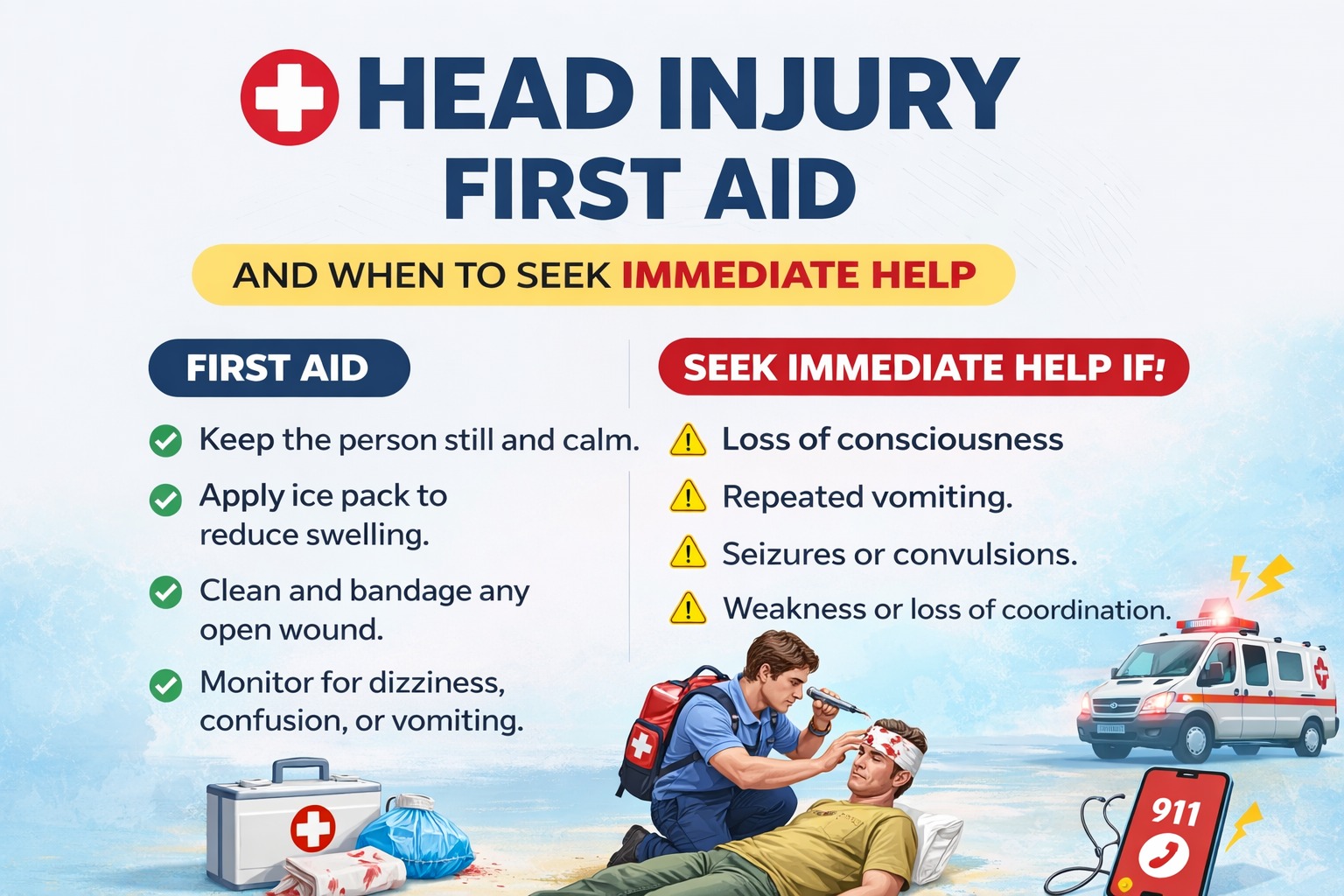
Head injuries can happen anytime—whether from road accidents, falls, sports activities, or sudden impacts. While some injuries may seem minor, others can be life-threatening and require urgent medical attention. Knowing how to respond quickly can make a critical difference in saving a life.
What is a Head Injury?
A head injury refers to any trauma to the scalp, skull, or brain. It can range from a mild bump or concussion to severe brain damage. Even a seemingly small injury should never be ignored.
🔹 Common Causes of Head Injuries
- Road accidents
- Falls (especially in children and elderly)
- Sports injuries
- Physical assaults
- Workplace accidents
🔹 Signs & Symptoms to Watch For
After a head injury, look out for these warning signs:
⚠️ Mild Symptoms:
- Headache
- Dizziness
- Nausea or vomiting
- Temporary confusion
🚨 Serious Symptoms:
- Loss of consciousness
- Severe or worsening headache
- Repeated vomiting
- Seizures
- Difficulty speaking or understanding
- Weakness or numbness in limbs
- Bleeding from nose or ears
If any serious symptoms appear, it could indicate a brain injury and needs immediate attention.
🔹 First Aid for Head Injury
Taking the right first aid steps can prevent complications:
✅ Stay Calm & Assess the Situation
Check if the person is conscious and breathing.
✅ Keep the Person Still
Avoid moving the head or neck to prevent further injury.
✅ Control Bleeding
If there is bleeding, apply gentle pressure using a clean cloth.
Apply a Cold Compress
For swelling, gently apply an ice pack wrapped in cloth.
✅ Monitor Symptoms
Keep observing the person for any changes in behavior or condition.
🔹 When to Seek Immediate Medical Help 🚑
Do not delay medical care if you notice:
- Loss of consciousness (even briefly)
- Persistent vomiting
- Severe headache
- Unequal pupil size
- Confusion or unusual behavior
- Difficulty walking or speaking
- Seizures
👉 In such cases, call emergency services immediately or rush to the nearest hospital.
🔹 Prevention Tips
- Always wear helmets while driving or riding
- Use seat belts in vehicles
- Ensure safety measures at home and workplace
- Supervise children during play
- Avoid risky behaviors
🔹 Conclusion
Head injuries should never be taken lightly. Quick first aid and timely medical intervention can prevent serious complications and even save lives. Staying aware and prepared is the best way to protect yourself and others.
