
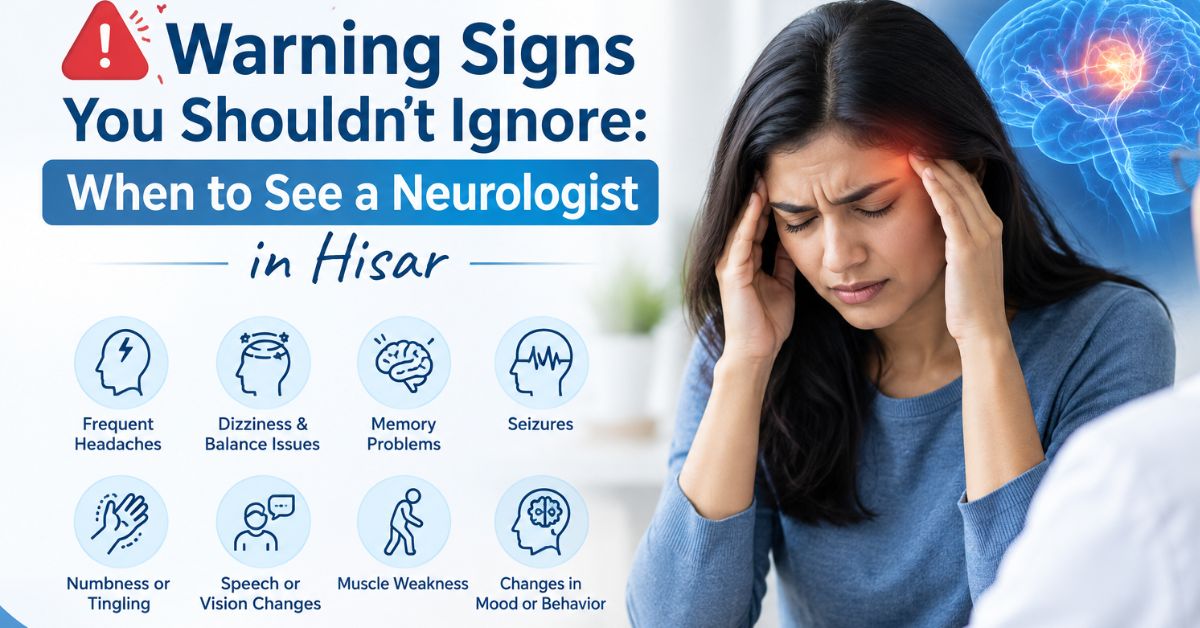
Most of us shrug off the occasional headache or a tingling foot as “nothing serious.” Most of the time, that’s true. But the nervous system is also the one part of the body where small, easily-ignored symptoms can be early signals of something that needs prompt attention. Knowing when a symptom is ordinary and when it’s your body asking for a neurologist is one of the most useful things you can learn for yourself and your family.
At VK Neurocare, Hisar’s leading neurology hospital, we see patients every day who waited weeks or months before getting checked often because they didn’t realize their symptoms fell under neurology at all. Here’s a practical guide to help you decide.
1. Frequent or Severe Headaches
An occasional headache is common. But headaches that are severe, sudden (“the worst headache of my life”), wake you up from sleep, or come with vomiting, vision changes, or confusion need urgent evaluation. Chronic migraines that disrupt your work or daily routine are also worth discussing with a neurologist rather than just managing with painkillers.
2. Numbness, Tingling, or Weakness
Sudden numbness or weakness in the face, arm, or leg especially on one side of the body is a classic warning sign of stroke and needs emergency care immediately. Persistent tingling, pins-and-needles, or muscle weakness that isn’t linked to an obvious cause (like sitting awkwardly) can point to nerve compression, neuropathy, or other neurological conditions.
3. Memory Lapses and Confusion
Occasionally forgetting where you left your keys is normal. Repeated forgetfulness, getting confused about time or place, difficulty following conversations, or personality changes noticed by family members can be early indicators of conditions like dementia or other cognitive disorders and earlier diagnosis generally means better management.
4. Seizures or Unexplained Loss of Consciousness
Any seizure even a single episode or an unexplained blackout should always be evaluated by a neurologist. These can stem from epilepsy, metabolic issues, or other underlying neurological causes that need proper testing to identify.
5. Tremors or Difficulty with Movement
Shaking hands, stiffness, slowed movement, or difficulty with balance and coordination can be early signs of movement disorders such as Parkinson’s disease. Catching these early allows for treatment plans that can meaningfully improve quality of life.
6. Persistent Dizziness or Loss of Balance
Occasional dizziness happens to everyone. But frequent vertigo, a feeling that the room is spinning, or a noticeable loss of balance while walking can point to issues in the nervous system or inner ear that a neurologist can help diagnose.
7. Vision Problems Without an Eye Cause
Blurred or double vision, sudden vision loss, or visual disturbances that your eye doctor can’t explain sometimes originate in the nervous system rather than the eyes themselves, and are worth a neurology consultation.
Why Choose VK Neurocare, Hisar
VK Neurocare, founded by Dr. V K Gupta, has grown into one of the most trusted names in neurological care in Haryana. As the first neurology hospital in Hisar to receive ISO certification, we combine state-of-the-art diagnostic technology with a team of experienced neurologists to deliver accurate diagnosis and personalized treatment all under one roof.
Whether it’s a routine consultation or a complex neurological condition, our patient-centric approach ensures you’re not just treated, but genuinely cared for.
If you’re experiencing any of the symptoms above, don’t wait it out. Book a consultation with VK Neurocare’s specialists today and get the clarity you deserve.
