
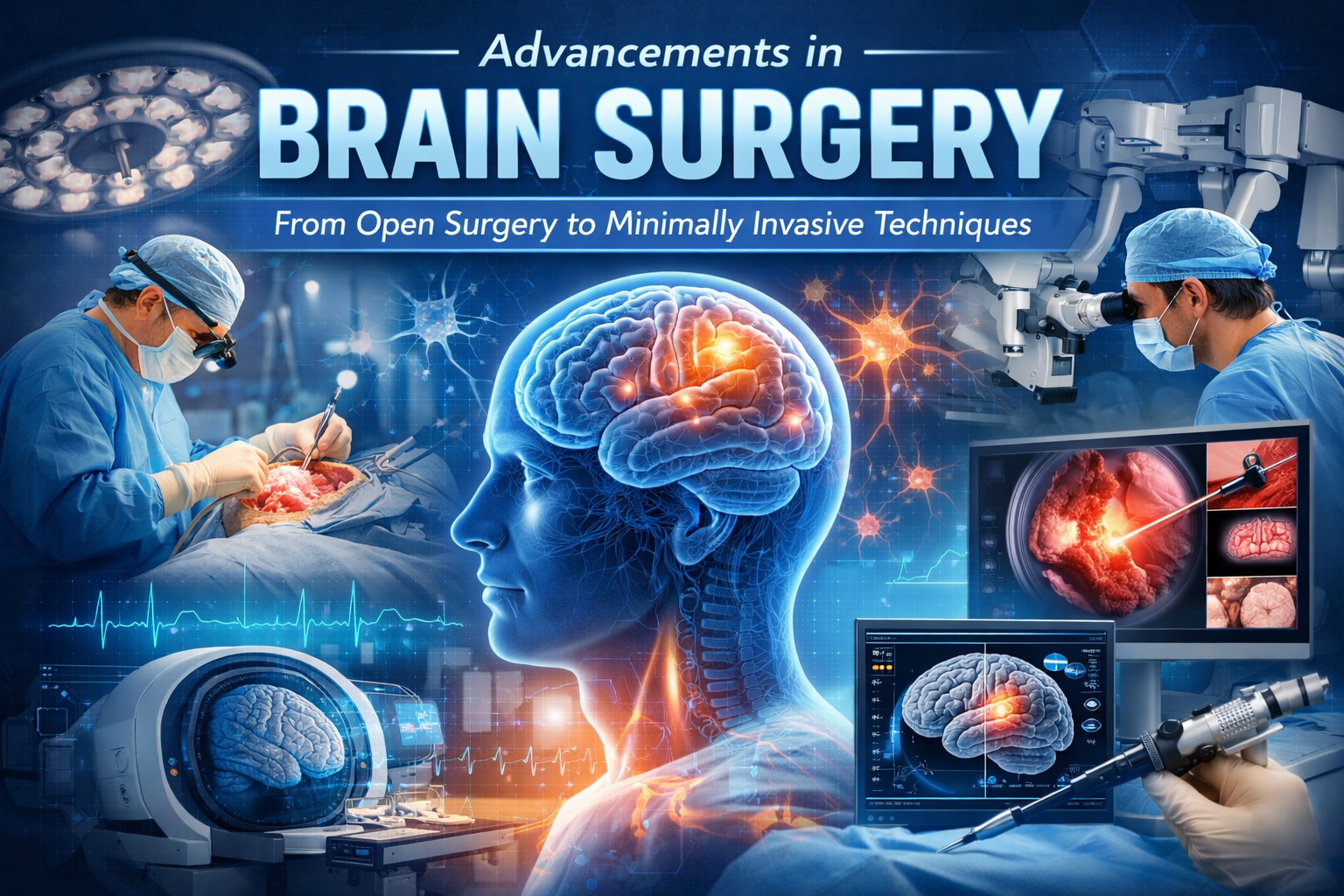
Brain surgery, once considered highly risky and complex, has evolved significantly over the years. With rapid advancements in medical technology and surgical techniques, neurosurgery is now safer, more precise, and less invasive than ever before. These innovations are transforming patient outcomes and recovery experiences.
Traditional Open Brain Surgery
In the past, brain surgery typically involved open craniotomy, where a large portion of the skull is removed to access the brain. While this method allowed surgeons to treat serious conditions like brain tumors, trauma, and aneurysms, it came with several challenges:
- Larger incisions
- Higher risk of infection
- Longer hospital stays
- Extended recovery periods
Despite these risks, open surgery played a crucial role in saving countless lives and remains necessary in certain complex cases.
🔹 The Rise of Minimally Invasive Techniques
Modern neurosurgery has shifted toward minimally invasive procedures, which use smaller incisions and advanced tools to perform surgeries with greater precision. These techniques aim to reduce trauma to the brain and surrounding tissues.
Some of the most notable minimally invasive approaches include:
✅ Endoscopic Brain Surgery
This technique uses a thin tube with a camera (endoscope) inserted through small openings. Surgeons can operate with enhanced visualization and minimal damage.
✅ Keyhole Surgery
Small “keyhole” openings are made in the skull to access the affected area, reducing scarring and speeding up recovery.
✅ Laser Ablation
Laser technology is used to destroy abnormal tissues like tumors with pinpoint accuracy.
✅ Robotic-Assisted Surgery
Robotic systems help surgeons perform highly delicate procedures with improved precision and control.
🔹 Benefits of Modern Brain Surgery
The shift toward minimally invasive techniques offers several advantages:
- Less pain and discomfort
- Reduced risk of complications
- Shorter hospital stays
- Faster recovery time
- Minimal scarring
Patients can often return to their normal lives much sooner compared to traditional methods.
Role of Technology in Neurosurgery
Advanced technologies are playing a key role in improving surgical outcomes:
- MRI and CT imaging for accurate diagnosis
- Neuronavigation systems for precise surgical guidance
- Artificial Intelligence (AI) for better planning and decision-making
- 3D imaging and augmented reality for enhanced visualization
These tools allow neurosurgeons to perform complex procedures with greater confidence and safety.
🔹 The Future of Brain Surgery
The future of neurosurgery looks promising, with continuous innovations on the horizon. Researchers are exploring:
- Non-invasive techniques like focused ultrasound
- Personalized treatment plans using AI
- Advanced robotics for even greater precision
These developments aim to make brain surgery even safer, faster, and more effective.
🔹 Conclusion
The journey from traditional open brain surgery to minimally invasive techniques marks a significant milestone in medical science. Today, patients benefit from safer procedures, quicker recoveries, and improved outcomes. As t
