
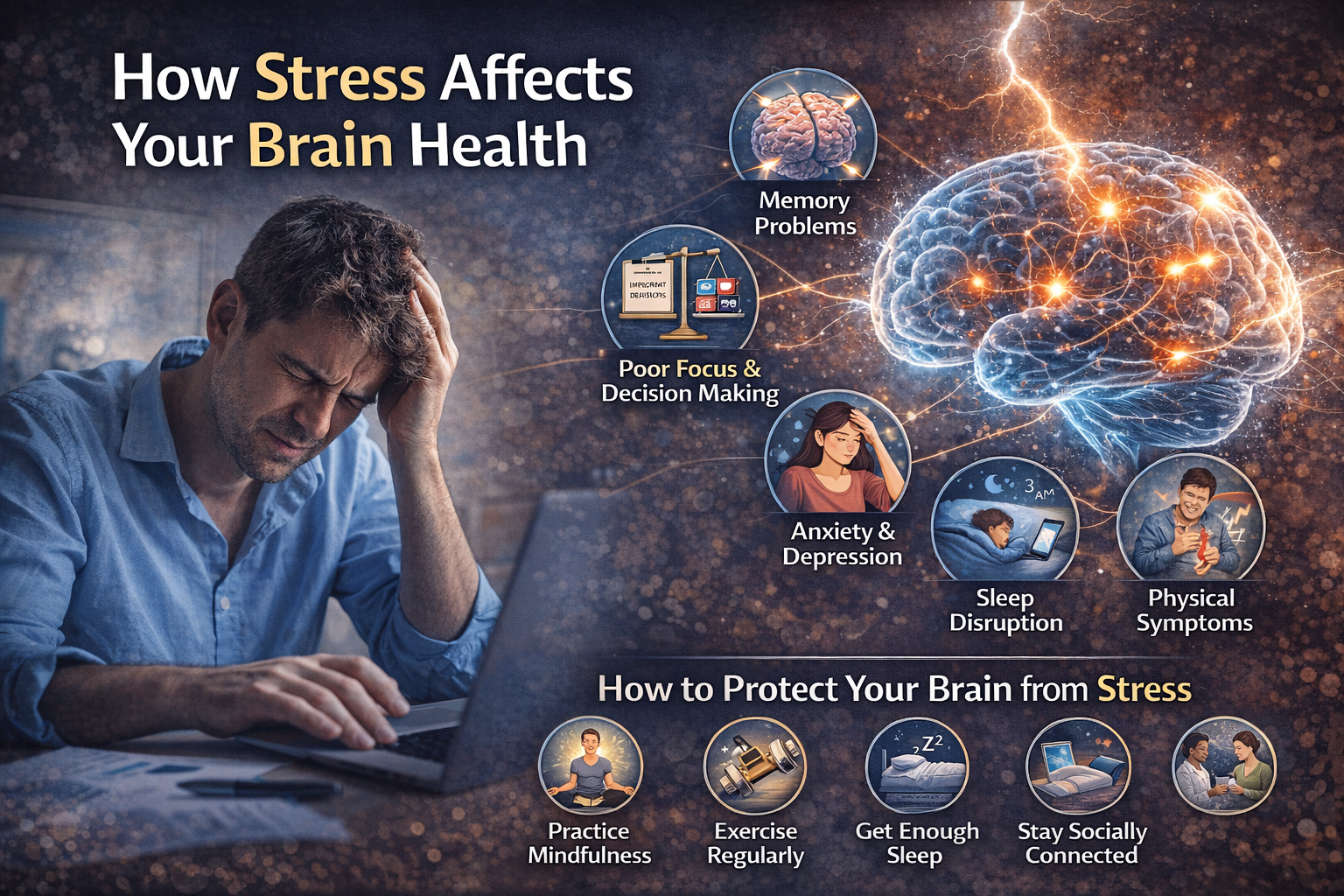
Stress is a natural part of life. Deadlines, responsibilities, financial concerns, family pressures — we all experience it. In small doses, stress can actually help us stay alert and motivated. But when stress becomes chronic, it can silently damage one of the most important organs in our body — the brain.
Have you ever felt forgetful during stressful periods? Or struggled to focus when overwhelmed? That’s not a coincidence. Stress directly affects brain structure, function, and emotional balance. Let’s explore how.
What Happens in the Brain During Stress?
When we face a stressful situation, the brain activates the “fight or flight” response. The hypothalamus signals the adrenal glands to release stress hormones, mainly cortisol and adrenaline.
In short bursts, this response is helpful. It sharpens attention and prepares the body to react. However, when stress becomes long-term, elevated cortisol levels begin to harm the brain.
Think of it like running an engine at maximum speed all the time — eventually, wear and tear occur.
The Role of Cortisol in Brain Health
Cortisol is essential for survival, but too much of it can:
-
Damage brain cells
-
Reduce memory capacity
-
Disrupt emotional regulation
-
Affect sleep patterns
Chronic stress keeps cortisol levels high, which interferes with normal brain functioning.
How Stress Affects Memory
One of the most affected areas of the brain during stress is the hippocampus — the region responsible for learning and memory.
Prolonged stress can:
-
Shrink hippocampal volume
-
Reduce the formation of new neurons
-
Cause forgetfulness
-
Impair learning ability
That’s why students under intense stress often struggle to retain information.
Impact on Decision-Making and Focus
Stress also affects the prefrontal cortex, the part of the brain responsible for:
-
Decision-making
-
Concentration
-
Problem-solving
-
Self-control
Under chronic stress, this area becomes less efficient. You may notice:
-
Difficulty concentrating
-
Impulsive decisions
-
Reduced productivity
-
Mental fatigue
It becomes harder to think clearly when stress dominates the brain
Stress and Emotional Health
The amygdala, which processes emotions like fear and anxiety, becomes overactive during prolonged stress.
This can lead to:
-
Increased anxiety
-
Mood swings
-
Irritability
-
Depression symptoms
In simple terms, stress rewires the brain toward a more reactive and anxious state.
Sleep Disturbances and Brain Recovery
Stress often disrupts sleep. Unfortunately, sleep is when the brain repairs itself and consolidates memories.
Lack of sleep due to stress can:
-
Reduce cognitive performance
-
Increase emotional instability
-
Lower immune function
-
Worsen anxiety
It becomes a vicious cycle — stress disrupts sleep, and poor sleep increases stress.
Long-Term Effects of Chronic Stress
If unmanaged, chronic stress may increase the risk of:
-
Anxiety disorders
-
Depression
-
Memory decline
-
Cognitive impairment
-
Increased risk of neurodegenerative conditions
Over time, continuous exposure to high cortisol can alter brain structure permanently
Physical Symptoms Linked to Brain Stress
Stress doesn’t just affect the mind — it affects the whole body.
Common symptoms include:
-
Headaches
-
Muscle tension
-
Fatigue
-
Digestive issues
-
High blood pressure
The brain and body are deeply connected.
Positive Stress vs. Harmful Stress
Not all stress is bad.
-
Acute stress (short-term) can improve performance.
-
Chronic stress (long-term) damages health.
The key difference is duration and recovery time.
If the brain gets time to relax and reset, stress becomes manageable.
How to Protect Your Brain from Stress Damage
The good news? The brain is adaptable. With proper habits, you can protect and even restore brain health.
1. Practice Regular Exercise
Physical activity reduces cortisol and boosts mood-enhancing chemicals like endorphins.
2. Prioritize Sleep
Aim for 7–8 hours of quality sleep daily.
3. Practice Mindfulness and Meditation
Deep breathing and meditation calm the nervous system.
4. Maintain Social Connections
Talking to trusted friends or family reduces stress burden.
5. Balanced Nutrition
Omega-3 fatty acids, antioxidants, and whole foods support brain health.
6. Limit Screen Overload
Excessive digital exposure can worsen mental fatigue.
When to Seek Professional Help
If stress leads to:
-
Persistent anxiety
-
Severe mood changes
-
Memory issues
-
Panic attacks
-
Difficulty functioning daily
It is important to consult a healthcare professional. Early support can prevent long-term damage.
Conclusion
Stress is unavoidable, but its impact on brain health depends on how we manage it. Short-term stress can sharpen our senses, but chronic stress can shrink memory centers, weaken decision-making abilities, and disrupt emotional balance.
The brain is powerful — yet vulnerable. By prioritizing mental well-being, sleep, exercise, and relaxation techniques, we can protect our brain from the silent damage of long-term stress.
Remember, caring for your brain is not a luxury — it is a necessity for a healthy, productive life.
