
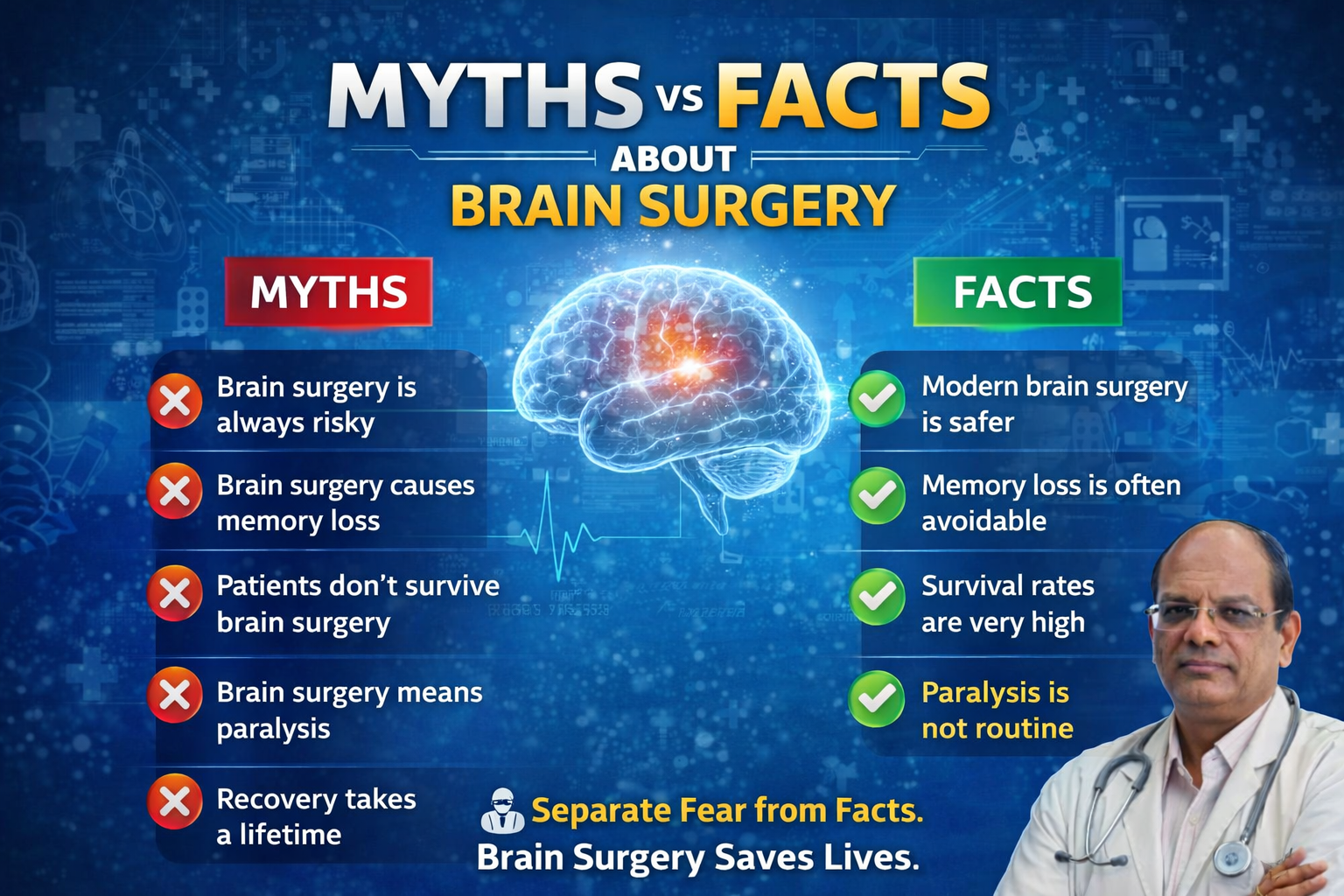
The words “brain surgery” often trigger fear, anxiety, and a flood of worst-case scenarios. Many people imagine a risky procedure with permanent consequences. But how much of what we believe is actually true?
In reality, modern brain surgery is far safer and more advanced than most people realize. In this article, we break down common myths vs facts about brain surgery, separating fear from facts—clearly, honestly, and simply.
Introduction: Why Brain Surgery Is Surrounded by Fear
Why does brain surgery sound scarier than heart surgery?
Because the brain controls who we are—our thoughts, memories, and movements. Any intervention feels deeply personal. Over the years, misinformation, dramatic movies, and half-truths have created unnecessary panic. We believe it’s time to replace fear with facts.
Understanding Brain Surgery
Before debunking myths, let’s understand the basics.
What Is Brain Surgery?
Brain surgery, also called neurosurgery, involves surgical procedures to treat conditions affecting the brain, skull, nerves, and blood vessels. These procedures are performed by highly trained neuro surgeons using advanced technology and precision tools.
Why Brain Surgery Is Performed
Brain surgery is not done casually. It is recommended only when it offers the best chance of recovery or survival. Common reasons include:
-
Brain tumors
-
Head injuries
-
Brain hemorrhage
-
Stroke complications
-
Epilepsy
-
Congenital brain conditions
Why Myths About Brain Surgery Exist
Role of Movies, Media, and Misinformation
Cinema loves drama. Unfortunately, brain surgery is often portrayed as a last-minute, high-risk gamble. These exaggerated portrayals shape public perception—even though they are far from reality.
Fear of the Unknown
When people don’t understand something, fear fills the gap. Lack of awareness fuels myths, making patients delay treatment—which can be more dangerous than surgery itself.
Common Myths vs Facts About Brain Surgery
Now, let’s address the most common myths head-on.
Myth 1: Brain Surgery Is Always Risky
Fact:
Every surgery has risks, but modern brain surgery is safer than ever. Advanced imaging, neuronavigation, and experienced surgeons significantly reduce complications. In many cases, not doing surgery carries a higher risk.
Think of it like flying in an airplane—statistically safer than driving, despite how it feels.
Myth 2: Brain Surgery Causes Memory Loss
Fact:
Memory loss is not inevitable. Surgeons carefully avoid critical brain areas responsible for memory and speech. In fact, removing tumors or relieving pressure often improves memory and cognitive function.
Myth 3: Patients Don’t Survive Brain Surgery
Fact:
This is one of the biggest misconceptions. Survival rates for brain surgery are very high, especially when performed early and by experienced neuro surgeons. Thousands of patients return to normal life every year after brain surgery.
Myth 4: Brain Surgery Means Paralysis
Fact:
Paralysis is rare, not routine. Advanced surgical planning allows surgeons to protect motor areas of the brain. Many patients actually regain movement after surgery that relieves nerve compression or bleeding.
Myth 5: Recovery Takes a Lifetime
Fact:
Recovery time depends on the condition, not the word “brain surgery.” Some patients are back to daily activities within weeks. With proper rehabilitation, recovery can be faster than expected.
How Modern Technology Changed Brain Surgery
Brain surgery today is nothing like it was decades ago.
Advanced Imaging and Precision Tools
Technologies like MRI, CT scans, neuronavigation, and microscopes allow surgeons to see the brain in real time. This precision minimizes damage to healthy tissue.
Minimally Invasive Brain Surgery
Many procedures now use small incisions, reducing pain, hospital stay, and recovery time. Smaller entry, bigger impact—like fixing a system without tearing it apart.
Life After Brain Surgery
What happens after surgery? This is where hope replaces fear.
Recovery and Rehabilitation
Recovery includes medication, physiotherapy, speech therapy, and regular follow-ups. A structured plan ensures steady improvement.
Returning to Normal Life
Most patients return to work, family life, and daily routines. Brain surgery is not the end of life—it’s often a new beginning.
When Should You Consider Brain Surgery?
Symptoms That Require Surgical Evaluation
Don’t ignore these warning signs:
-
Persistent headaches
-
Seizures
-
Sudden weakness or numbness
-
Vision or speech problems
-
Loss of balance
Early consultation can prevent complications.
Importance of Consulting an Experienced Neuro Surgeon
Skill matters. Experience matters. Technology matters.
An experienced neuro surgeon evaluates whether surgery is truly needed and chooses the safest path forward. Second opinions and clear explanations empower patients to make confident decisions.
Conclusion
Brain surgery is often misunderstood and unfairly feared. The truth is, modern brain surgery saves lives, restores function, and improves quality of life. By separating myths from facts, we empower patients to seek timely care instead of living in fear. Knowledge is the strongest medicine—and when guided by expert hands, brain surgery can be a powerful step toward healing.
FAQs
1. Is brain surgery painful?
Pain is well-managed with modern anesthesia and medication. Most patients report manageable discomfort.
2. How long does brain surgery take?
It varies by condition, ranging from a few hours to longer complex procedures.
3. Will I be awake during brain surgery?
Some surgeries require awake monitoring, but patients feel no pain and are carefully guided.
4. Can brain surgery improve quality of life?
Yes. Many patients experience relief from symptoms like seizures, pain, or weakness.
5. Is brain surgery the last option?
No. It is recommended only when it offers the best outcome compared to other treatments.
