
Pediatric neurosurgery is a specialized field of medicine focused on diagnosing and treating neurological conditions in infants, children, and adolescents. Unlike adults, children’s brains and nervous systems are still developing, which means neurosurgical care must be carefully adapted to their unique needs. From congenital disorders to traumatic injuries, pediatric neurosurgeons play a vital role in ensuring the best possible outcomes for young patients.
Understanding Pediatric Neurosurgery
Pediatric neurosurgery involves surgical treatment of conditions affecting the brain, spine, and nervous system in children. These procedures require highly specialized knowledge because the anatomy, growth patterns, and recovery processes of children differ significantly from those of adults.
Children often respond differently to surgery, anesthesia, and medications. Therefore, pediatric neurosurgeons work closely with pediatricians, neurologists, anesthesiologists, and rehabilitation specialists to provide comprehensive care.
Common Conditions Treated in Pediatric Neurosurgery
Several neurological conditions in children may require surgical treatment. Some of the most common include:
1. Hydrocephalus
Hydrocephalus occurs when excess cerebrospinal fluid accumulates in the brain, causing increased pressure. Surgery, such as shunt placement or endoscopic procedures, is often required to relieve the pressure.
2. Brain Tumors
Brain tumors are among the most serious neurological conditions in children. Pediatric neurosurgeons work to remove or reduce tumors while protecting healthy brain tissue.
3. Spina Bifida
Spina bifida is a congenital spinal condition where the spine does not develop properly. Early surgical intervention can help prevent complications and improve mobility.
4. Epilepsy
In some cases, severe epilepsy that does not respond to medication may require neurosurgical procedures to control seizures.
5. Traumatic Brain Injury
Head injuries caused by accidents or falls may require urgent neurosurgical treatment to reduce brain swelling or repair damage.
Special Considerations in Pediatric Neurosurgery
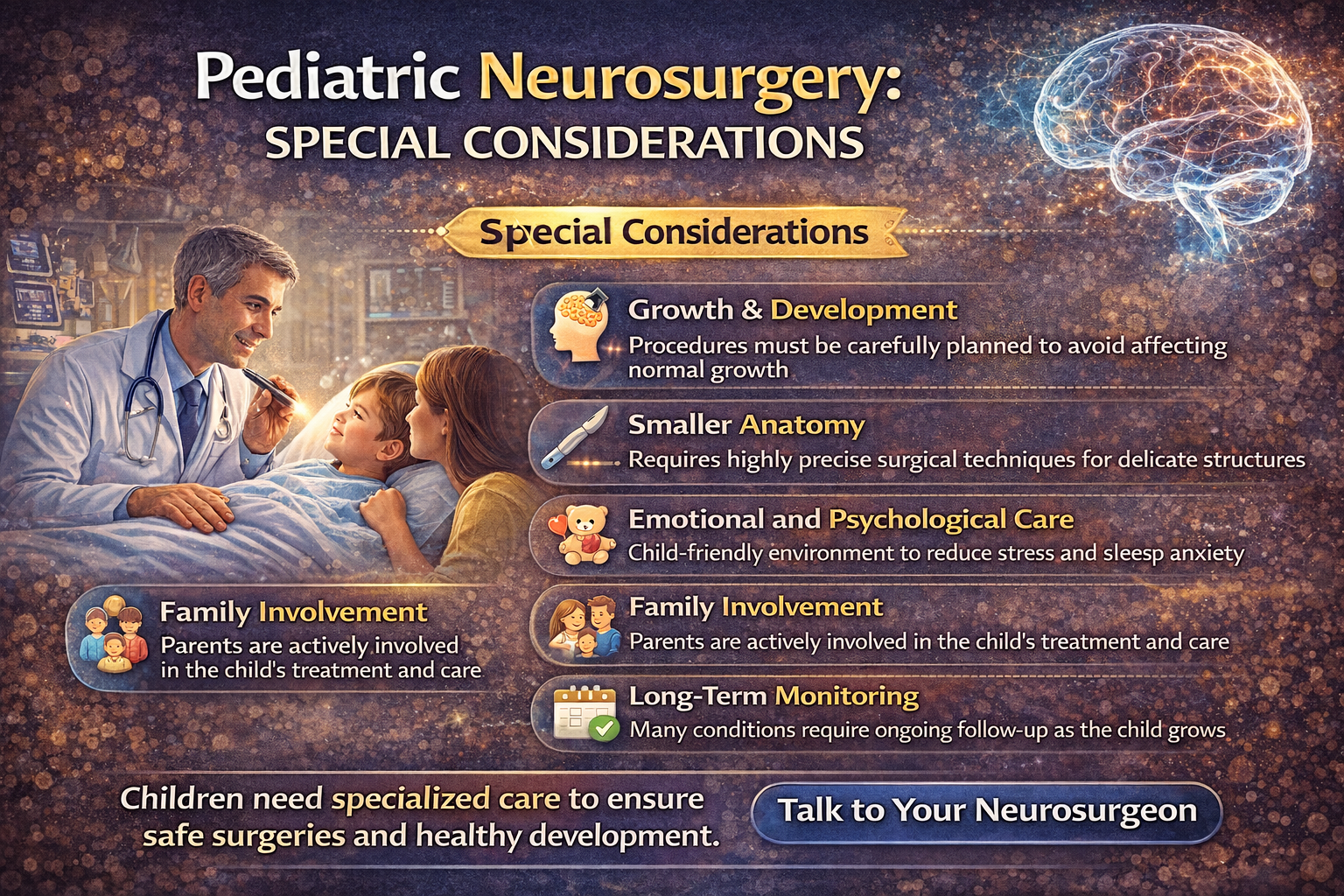
Treating children requires more than simply adjusting surgical techniques. Several important factors must be considered.
1. Growth and Development
Children’s brains and nervous systems are still developing. Surgeons must carefully plan procedures to avoid interfering with normal growth and neurological development.
2. Smaller Anatomy
Children have smaller and more delicate anatomical structures. This requires highly precise surgical techniques and specialized equipment designed specifically for pediatric patients.
3. Emotional and Psychological Care
Hospital visits and surgeries can be stressful for children. Pediatric neurosurgical teams focus on providing emotional support and creating a child-friendly environment to reduce anxiety.
4. Family Involvement
Parents and caregivers play a crucial role in the child’s treatment and recovery. Doctors ensure that families are fully informed about the condition, treatment options, and postoperative care.
5. Long-Term Monitoring
Many pediatric neurosurgical conditions require long-term follow-up because children continue to grow and develop. Regular monitoring helps detect complications early and ensures the best outcomes.
Recovery and Rehabilitation
Recovery after pediatric neurosurgery varies depending on the condition and procedure performed. Some children recover quickly, while others may need rehabilitation therapies such as:
-
Physical therapy
-
Occupational therapy
-
Speech therapy
-
Neurological monitoring
Early rehabilitation and continuous medical support can greatly improve recovery and quality of life.
The Importance of Specialized Care
Pediatric neurosurgery is a highly specialized field that requires advanced training, precision, and compassion. Treating neurological conditions in children is not only about performing surgery but also about supporting their growth, development, and overall well-being.
With modern medical advancements and multidisciplinary care, many children who undergo neurosurgery can lead healthy and fulfilling lives.
Conclusion
Pediatric neurosurgery involves unique challenges and special considerations due to the developing nature of a child’s brain and nervous system. By combining advanced surgical techniques with compassionate, family-centered care, pediatric neurosurgeons help ensure the best possible outcomes for young patients facing complex neurological conditions.
