
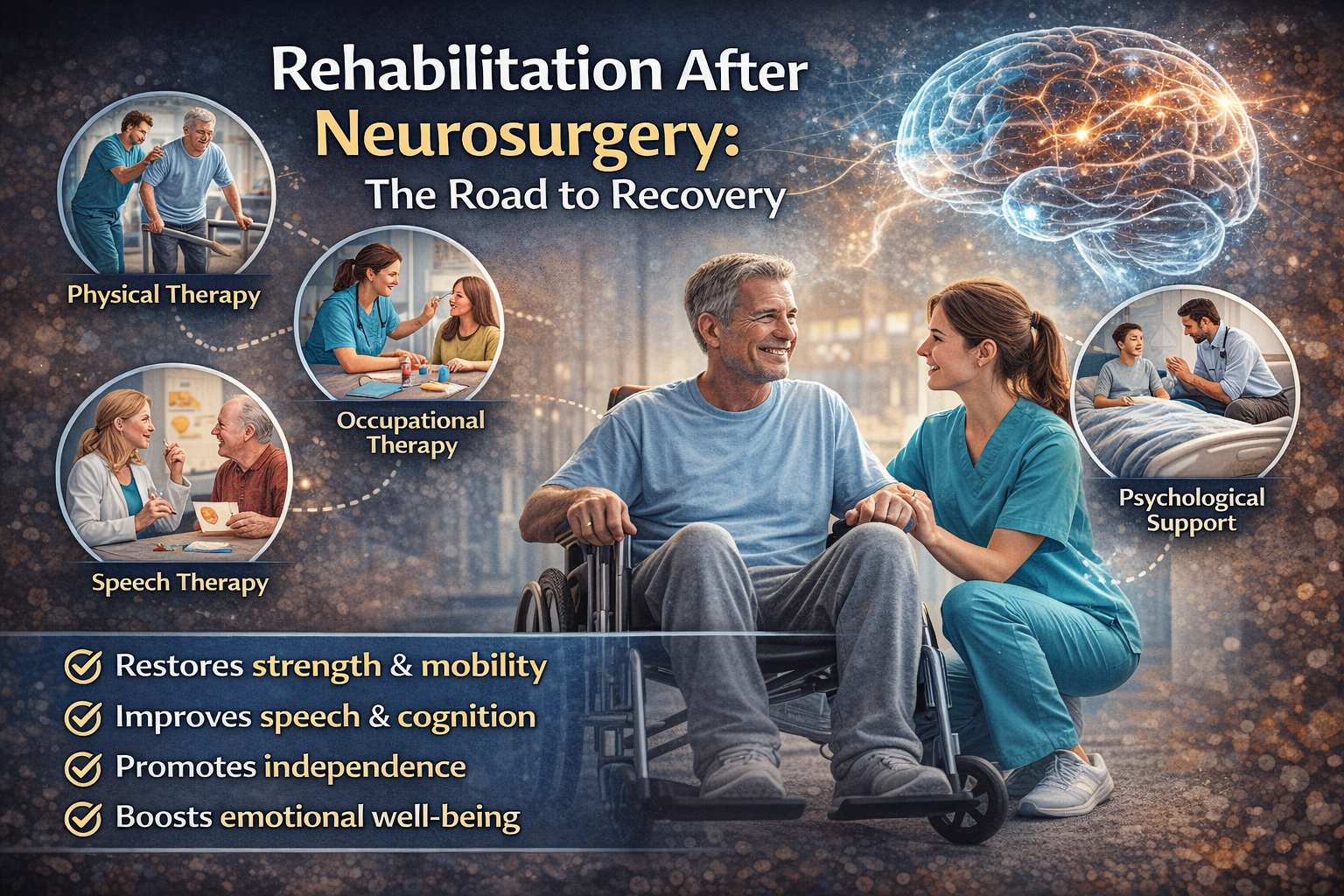
Neurosurgery is a major medical procedure involving the brain, spine, or nervous system. While the surgery itself is a critical step toward treatment, rehabilitation after neurosurgery plays an equally important role in ensuring long-term recovery and improved quality of life.
Recovery does not end in the operating room. In fact, for many patients, rehabilitation is where true healing begins.
Why Rehabilitation Is Important After Neurosurgery
Neurosurgical procedures — whether for brain tumors, spinal disorders, trauma, aneurysms, or nerve compression — can temporarily affect movement, speech, memory, balance, and coordination.
Rehabilitation helps:
-
Restore physical strength
-
Improve mobility and coordination
-
Enhance speech and cognitive skills
-
Reduce complications
-
Promote independence
-
Improve emotional well-being
Early rehabilitation significantly improves outcomes and reduces long-term disability.
When Does Rehabilitation Start?
In most cases, rehabilitation begins within 24–48 hours after surgery, depending on the patient’s condition.
Doctors and therapists assess:
-
Muscle strength
-
Balance and coordination
-
Speech and swallowing ability
-
Cognitive function
-
Pain levels
Based on this evaluation, a personalized rehabilitation plan is created.
Types of Rehabilitation After Neurosurgery
1. Physical Therapy
Physical therapy focuses on improving:
-
Muscle strength
-
Balance
-
Walking ability
-
Posture
-
Flexibility
This is especially important after spinal surgery or brain surgery affecting movement.
2. Occupational Therapy
Occupational therapy helps patients regain the ability to perform daily activities such as:
-
Dressing
-
Bathing
-
Cooking
-
Writing
-
Using electronic devices
The goal is to help patients become independent again.
3. Speech and Language Therapy
If neurosurgery affects speech, swallowing, or communication skills, speech therapy helps patients:
-
-
Improve clarity of speech
-
Regain language skills
-
Manage swallowing difficulties
-
Improve memory and cognitive abilities
4. Cognitive Rehabilitation
Brain surgeries may impact memory, attention, and decision-making. Cognitive rehabilitation includes exercises to improve:
-
Concentration
-
Problem-solving skills
-
Memory recall
-
Emotional control
5. Psychological Support
Recovery can be emotionally challenging. Anxiety, depression, or mood swings are common after brain or spine surgery.
Counseling and emotional support help patients:
-
Cope with stress
-
Build confidence
-
Stay motivated during recovery
How Long Does Recovery Take?
Recovery time varies depending on:
-
Type of surgery
-
Age of the patient
-
Overall health
-
Presence of complications
-
Level of neurological damage
Some patients recover in a few weeks, while others may need months of rehabilitation.
Consistency and patience are key.
Home-Based Rehabilitation Tips
After hospital discharge, patients can continue recovery at home:
-
Follow prescribed exercises regularly
-
Maintain a healthy, protein-rich diet
-
Stay hydrated
-
Get adequate sleep
-
Avoid heavy lifting (especially after spinal surgery)
-
Attend follow-up appointments
Never skip medication or therapy sessions.
Warning Signs During Recovery
Seek medical attention if the patient experiences:
-
Severe headache
-
Sudden weakness
-
Seizures
-
Confusion
-
Persistent vomiting
-
High fever
-
Worsening pain
Early intervention prevents serious complications.
Importance of Family Support
Family plays a major role in recovery. Encouragement, patience, and emotional support greatly impact
healing speed and confidence.
Small improvements should be celebrated to keep motivation high.
Final Thoughts
Rehabilitation after neurosurgery is not just about physical healing — it is about restoring confidence, independence, and quality of life. With proper medical guidance, structured therapy, and emotional support, most patients can achieve significant improvement.
If you or your loved one has undergone neurosurgery, consult your healthcare provider about starting a comprehensive rehabilitation program as early as possible.
Recovery is a journey — and every step forward matters.
-
-
-
