
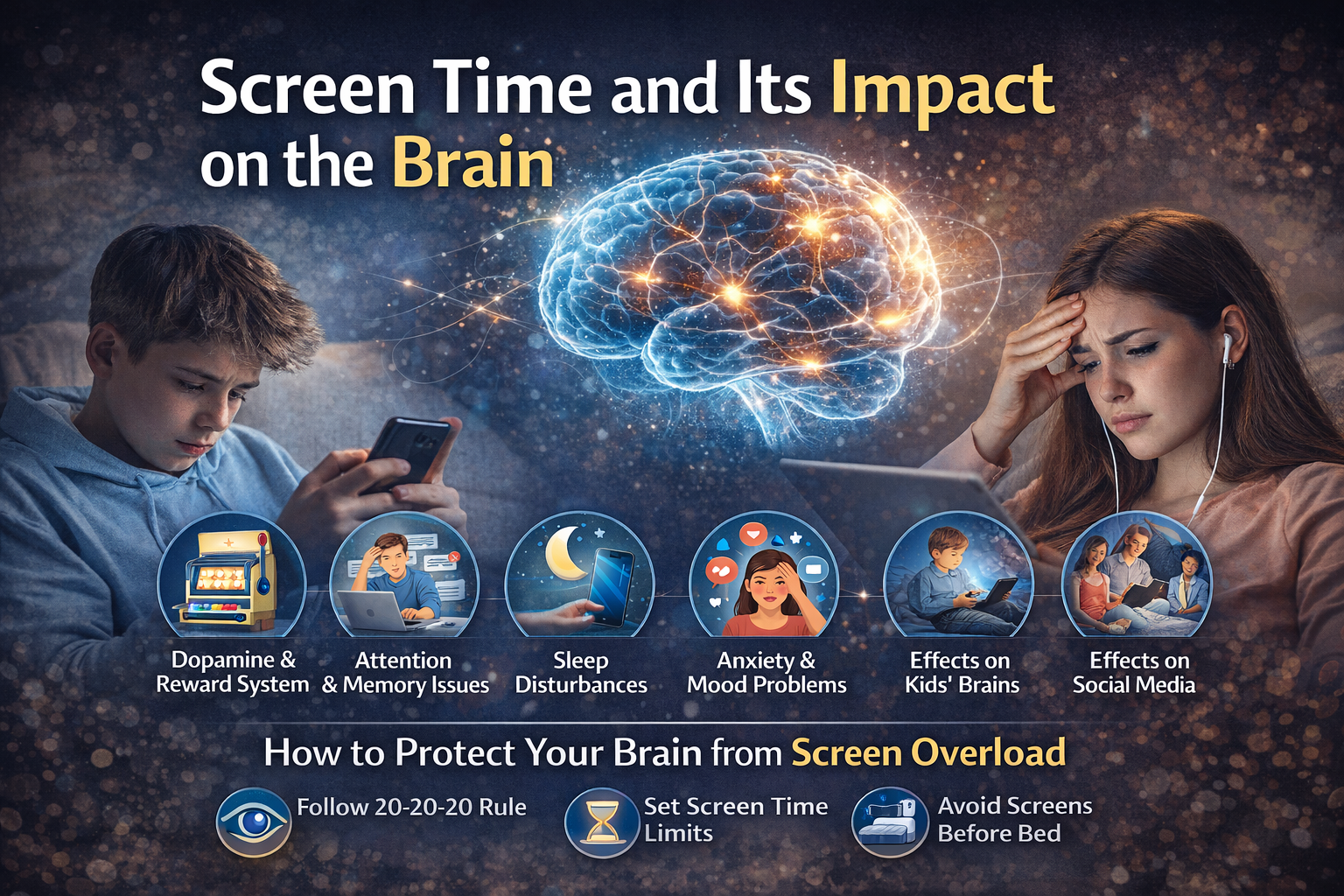
In today’s digital world, screens are everywhere — smartphones, laptops, tablets, televisions, and even smartwatches. From work meetings and online classes to social media scrolling and binge-watching, screen time has become an unavoidable part of daily life. While technology offers convenience and connectivity, excessive screen exposure can significantly affect brain function, mental health, and overall well-being.
This article explores how screen time impacts the brain, both positively and negatively, and how to maintain a healthy balance.
What Is Screen Time?
Screen time refers to the amount of time spent using devices with digital screens, such as:
-
Computers and laptops
-
Tablets
-
Televisions
-
Gaming consoles
Not all screen time is harmful. Educational content, productive work, and meaningful communication can be beneficial. However, excessive and unregulated usage can have consequences.
How Screen Time Affects the Brain
1. Dopamine and Reward System
When we scroll through social media, play video games, or receive notifications, the brain releases dopamine — the “feel-good” chemical. This activates the brain’s reward system.
Over time, constant stimulation can:
-
Reduce attention span
-
Increase dependence on digital stimulation
-
Make offline activities feel less engaging
The brain becomes accustomed to quick rewards, making it harder to focus on slower, more demanding tasks like studying or reading.
2. Attention and Concentration
Frequent switching between apps, messages, and videos trains the brain for multitasking. However, research suggests that heavy screen use can reduce sustained attention and deep focus ability.
This may result in:
-
Difficulty concentrating
-
Reduced productivity
-
Poor academic or work performance
The brain adapts to short bursts of information instead of long-term concentration.
3. Impact on Memory
Excessive screen time may affect working memory — the ability to hold and process information temporarily. When we rely heavily on digital devices for information storage (like phone contacts or reminders), the brain may engage less in memory-building processes.
4. Sleep Disturbances
Blue light emitted from screens interferes with melatonin production — the hormone responsible for sleep regulation.
Using devices before bedtime can:
-
Delay sleep onset
-
Reduce sleep quality
-
Disrupt natural sleep cycles
Poor sleep directly affects brain function, mood, and cognitive performance.
5. Emotional and Mental Health Effects
Heavy screen time, especially on social media, can influence emotional well-being.
Possible effects include:
-
Increased anxiety
-
Depression symptoms
-
Social comparison stress
-
Reduced real-life social interaction
Constant exposure to curated online content can distort reality and affect self-esteem.
Effects on Children and Adolescents
Young brains are still developing, making them more vulnerable to excessive screen exposure.
In children, too much screen time may:
-
Delay language development
-
Affect social skills
-
Reduce physical activity
-
Impact emotional regulation
However, educational and interactive screen use under supervision can support learning when balanced appropriately.
Are There Any Benefits of Screen Time?
Yes — when used responsibly.
Positive impacts include:
-
Access to educational resources
-
Improved digital literacy
-
Online learning opportunities
-
Social connection across distances
-
Brain-training games that enhance problem-solving skills
The key is moderation and mindful usage.
Signs of Excessive Screen Use
You may need to reassess screen habits if you notice:
-
Difficulty focusing without checking your phone
-
Irritability when not using devices
-
Reduced face-to-face interaction
-
Sleep problems
-
Headaches or eye strain
These can signal digital overload.
How to Protect Your Brain from Screen Overload
1. Follow the 20-20-20 Rule
Every 20 minutes, look at something 20 feet away for 20 seconds to reduce eye strain.
2. Set Screen Time Limits
Use device settings to monitor and limit daily usage.
3. Avoid Screens Before Bed
Stop using devices at least 1 hour before sleeping.
4. Encourage Offline Activities
Reading, exercising, hobbies, and outdoor activities support brain health.
5. Practice Digital Detox
Designate tech-free times or days to reset your mind.
Balancing Technology and Brain Health
Technology is not the enemy — overuse is. The brain is highly adaptable, and healthy digital habits can prevent long-term negative effects. By being mindful of screen exposure and prioritizing real-world interactions, sleep, and physical activity, we can harness technology’s benefits without harming brain health.
Conclusion
Screen time plays a powerful role in shaping modern life and brain function. While it provides convenience, learning opportunities, and connection, excessive usage can affect attention, sleep, emotional health, and cognitive performance. Understanding these effects empowers individuals and families to build healthier digital habits.
The goal is not to eliminate screens — but to use them wisely.
