
Spine surgery is often recommended to relieve chronic back pain, nerve compression, spinal instability, or injuries that do not improve with conservative treatment. While the surgery itself is important, understanding spine surgery recovery time helps patients prepare mentally and physically for the healing process.
Recovery varies from person to person, depending on the type of surgery and overall health condition.
How Long Does Spine Surgery Recovery Take?
Recovery time depends on several factors, including:
-
Type of spine surgery
-
Age of the patient
-
Overall health
-
Severity of the spinal condition
-
Post-surgery rehabilitation
Here’s a general timeline:
1. Minimally Invasive Spine Surgery
Procedures like microdiscectomy or minimally invasive decompression typically have:
-
Hospital stay: 1–2 days
-
Light activity: Within 2–4 weeks
-
Full recovery: 4–6 weeks
These surgeries involve smaller incisions and faster healing.
2. Spinal Fusion Surgery
Spinal fusion is more complex and requires longer recovery:
-
Hospital stay: 3–5 days
-
Light activity: 6–8 weeks
-
Bone fusion completion: 3–6 months
-
Full recovery: 6–12 months
Bone healing takes time, so patience is essential.
3. Laminectomy or Decompression Surgery
This surgery relieves pressure on spinal nerves.
-
Walking: Within 24 hours
-
Return to desk job: 4–6 weeks
-
Full recovery: 2–3 months
What Happens Immediately After Surgery?
After spine surgery, patients may experience:
-
Mild to moderate pain
-
Stiffness
-
Temporary weakness
-
Fatigue
Doctors manage pain with medication, and early movement is encouraged to prevent complications like blood clots.
Phases of Spine Surgery Recovery
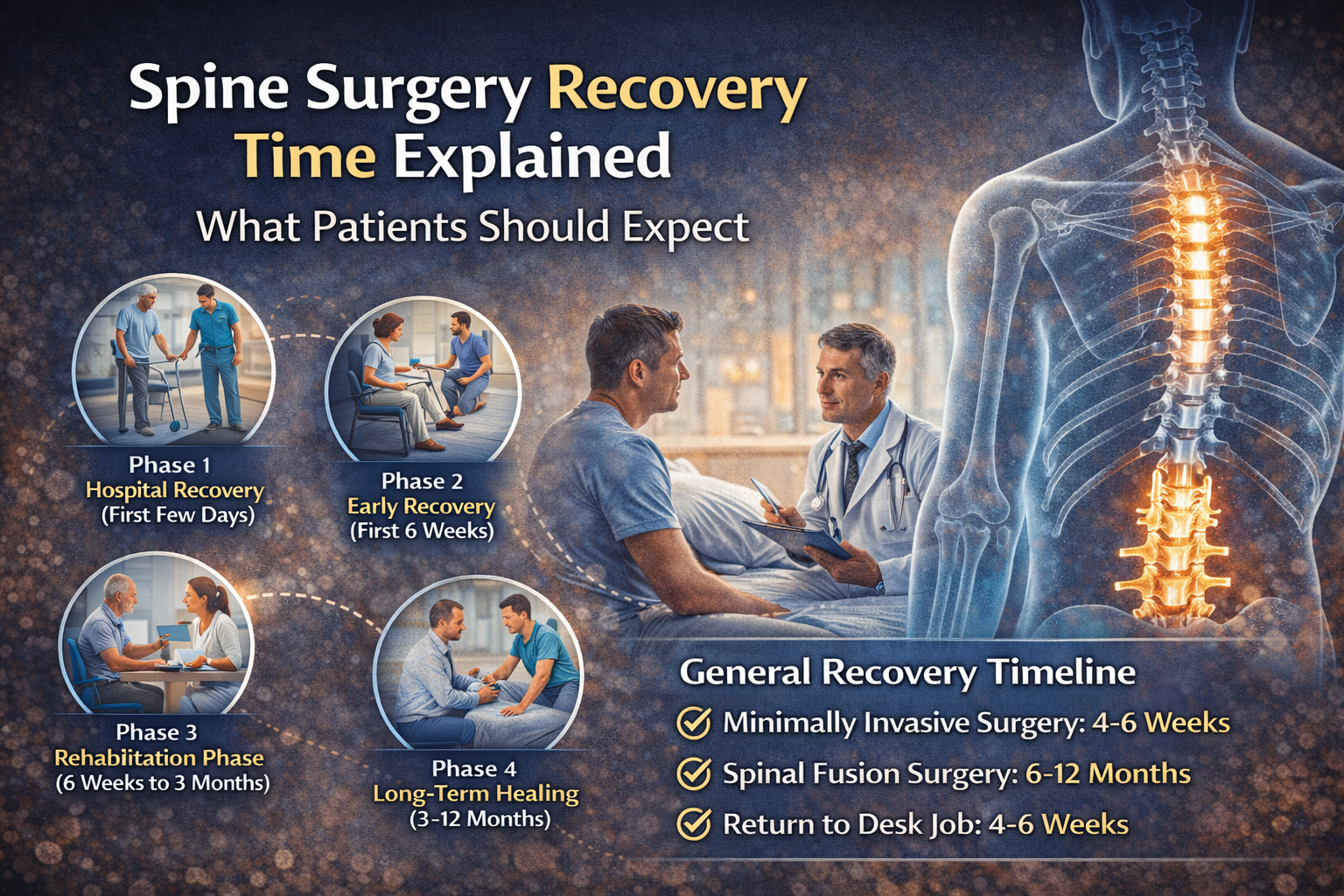
Phase 1: Hospital Recovery (First Few Days)
-
Pain management
-
Assisted walking
-
Monitoring for complications
Phase 2: Early Recovery (First 6 Weeks)
-
Limited bending, lifting, twisting
-
Gradual increase in walking
-
Light daily activities
Phase 3: Rehabilitation Phase (6 Weeks to 3 Months)
-
Physical therapy
-
Core strengthening exercises
-
Posture correction
Phase 4: Long-Term Healing (3–12 Months)
-
Continued strengthening
-
Return to normal activities
-
Complete bone healing (in fusion cases)
Tips to Speed Up Recovery
✔ Follow your doctor’s instructions strictly
✔ Attend all physical therapy sessions
✔ Avoid heavy lifting
✔ Maintain good posture
✔ Eat a protein-rich, calcium-rich diet
✔ Quit smoking (it delays bone healing)
✔ Stay active but avoid overexertion
Warning Signs During Recovery
Contact your doctor immediately if you experience:
-
Severe or worsening pain
-
Fever
-
Redness or discharge from incision
-
Numbness or weakness in legs
-
Loss of bladder or bowel control
Early intervention prevents serious complications.
When Can You Return to Work?
Return-to-work timing depends on your job type:
-
Desk job: 4–6 weeks
-
Light physical work: 2–3 months
-
Heavy labor: 3–6 months (or longer)
Always consult your surgeon before resuming strenuous activities.
Final Thoughts
Spine surgery recovery time varies, but most patients gradually return to normal life with proper care and rehabilitation. The key to successful recovery is patience, consistency, and following medical advice.
If you are planning spine surgery or have recently undergone the procedure, discuss a personalized recovery plan with your spine specialist.
Healing takes time — but every step forward brings you closer to a pain-free life.
