
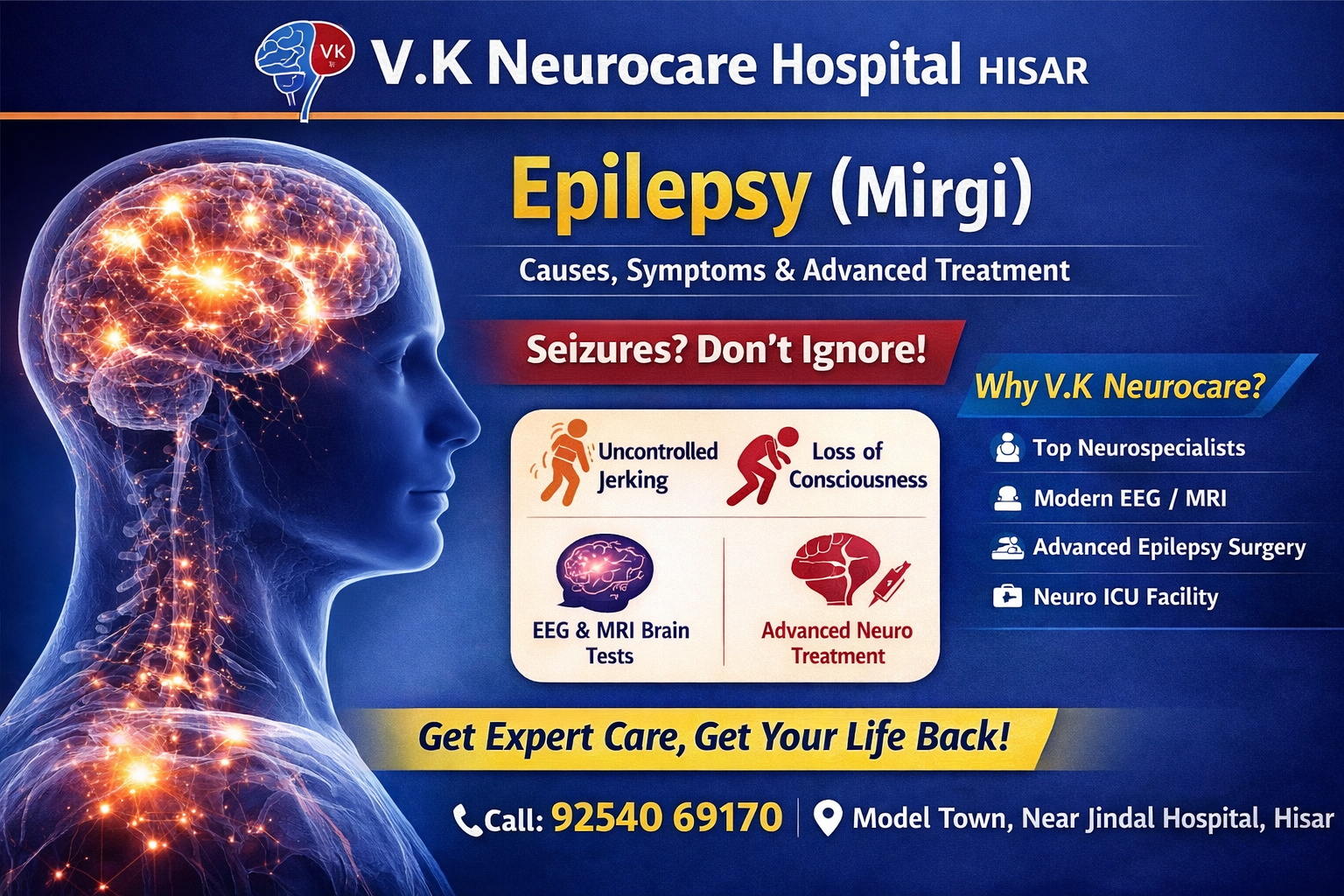
Epilepsy, commonly known as Mirgi, is one of the most misunderstood neurological disorders. Despite affecting millions worldwide, myths and fear often surround it. At V.K Neurocare Hospital Hisar, we believe that awareness, early diagnosis, and advanced treatment can completely transform a patient’s quality of life. Epilepsy is not a curse, not a weakness, and certainly not untreatable — it is a medical condition that can be effectively managed with the right approach.
What Is Epilepsy?
Epilepsy is a chronic neurological disorder characterized by recurrent, unprovoked seizures. These seizures occur due to sudden bursts of abnormal electrical activity in the brain. Think of the brain as a perfectly synchronized orchestra — epilepsy happens when a few instruments suddenly play out of rhythm, causing disruption.
How the Brain Works During a Seizure
During a seizure, brain cells communicate in an uncontrolled manner. This can temporarily affect:
Movement
Awareness
Emotions
Sensations
The experience varies from person to person — some may have brief staring spells, while others experience full-body convulsions.
Types of Epilepsy
Generalized Seizures
These seizures affect both sides of the brain from the beginning. Common forms include:
Tonic-clonic seizures
Absence seizures
Myoclonic seizures
Focal (Partial) Seizures
Focal seizures start in one specific area of the brain. The patient may remain conscious or lose awareness depending on the affected region.
Causes of Epilepsy
Epilepsy does not have a single cause. In many patients, multiple factors contribute.
Genetic Causes
Some forms of epilepsy run in families. Genetic mutations can affect how brain cells communicate.
Acquired Causes
Brain Injury and Stroke
Head trauma, road accidents, and strokes are leading causes of adult-onset epilepsy.
Brain Infections
Conditions such as meningitis, encephalitis, and neurocysticercosis can damage brain tissue and trigger seizures.
Symptoms of Epilepsy
Symptoms depend on the seizure type but may include:
Sudden jerking movements
Temporary confusion
Loss of consciousness
Blank staring episodes
Unusual sensations or emotions
Common Warning Signs
Some patients experience an aura — a warning sign like dizziness, fear, or flashing lights — before a seizure begins.
How Epilepsy Is Diagnosed
Accurate diagnosis is the foundation of effective treatment.
EEG and Brain Imaging
At V.K Neurocare Hospital Hisar, we use advanced diagnostic tools such as:
EEG (Electroencephalogram)
MRI Brain
CT Scan
Video EEG Monitoring
These tests help pinpoint the seizure origin and guide treatment planning.
Advanced Epilepsy Treatment Options
Modern medicine has revolutionized epilepsy care. Today, most patients can lead seizure-free lives.
Medication-Based Treatment
Anti-epileptic drugs (AEDs) are the first line of treatment. With proper medication:
70–80% of patients achieve excellent seizure control
Long-term monitoring ensures safety and effectiveness
Epilepsy Surgery
For patients whose seizures do not respond to medicines, epilepsy surgery may be recommended. The goal is to remove or disconnect the seizure-causing brain area without affecting normal functions.
Vagus Nerve Stimulation (VNS)
VNS is an advanced therapy where a small device is implanted to regulate abnormal brain signals. It is especially useful in drug-resistant epilepsy.
Lifestyle and Dietary Management
Small changes can make a big difference:
Regular sleep
Stress management
Avoiding alcohol
Medically supervised ketogenic diet (especially in children)
Why Choose V.K Neurocare Hospital Hisar?
At V.K Neurocare Hospital Hisar, we combine medical expertise with compassionate care. Our strengths include:
Experienced neurosurgeons and neurologists
Advanced diagnostic technology
Dedicated Neuro ICU
Personalized treatment plans
Long-term patient support
We treat not just the condition, but the person living with it.
Living a Normal Life with Epilepsy
Can a person with epilepsy work, marry, and live independently? Absolutely. With the right treatment and awareness, epilepsy becomes just one small part of life — not its definition. Education, compliance, and regular follow-ups are the keys to long-term success.
Conclusion
Epilepsy (Mirgi) is a manageable neurological condition when diagnosed early and treated correctly. At V.K Neurocare Hospital Hisar, we are committed to offering advanced, ethical, and patient-centered epilepsy care. If seizures are affecting your life or that of a loved one, remember — help is available, and hope is real.
Frequently Asked Questions (FAQs)
1. Is epilepsy completely curable?
While not always curable, epilepsy is highly controllable in most patients with proper treatment.
2. Can epilepsy patients live a normal life?
Yes, most patients lead full, productive lives with regular treatment and follow-up.
3. Is epilepsy surgery safe?
When performed on selected patients by expert neurosurgeons, epilepsy surgery is safe and effective.
4. What should I do during a seizure?
Keep the patient safe, turn them on their side, and avoid putting anything in their mouth.
5. When should I consult a neuro specialist?
If seizures occur repeatedly, last more than five minutes, or occur after head injury, seek immediate medical care.
