
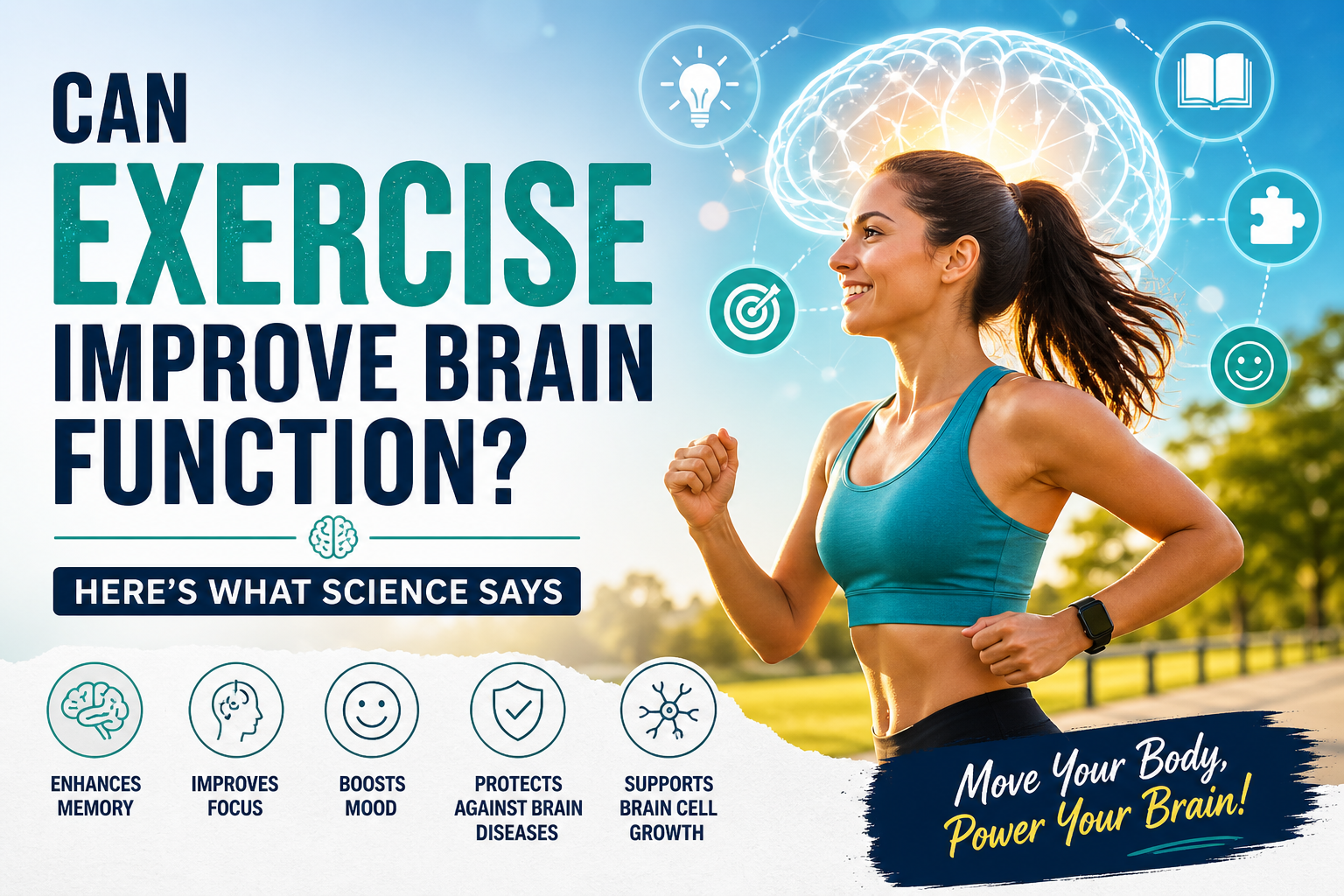
In today’s fast-paced world, we often associate exercise with physical fitness—weight loss, muscle gain, or stamina. But what if working out could also make you smarter, sharper, and mentally stronger? Modern research in neuroscience suggests exactly that: exercise doesn’t just transform your body—it transforms your brain too.
Let’s explore what science really says.
The Science Behind Exercise and the Brain
Scientific studies show that physical activity plays a major role in improving brain function. Exercise stimulates the release of important proteins called neurotrophic factors, especially BDNF (Brain-Derived Neurotrophic Factor), which help brain cells grow and survive.
This process is part of something called neuroplasticity—your brain’s ability to adapt, learn, and form new connections. Regular exercise enhances this ability, leading to better memory, learning, and overall cognitive performance.
Improved Blood Flow = Better Brain Power
When you exercise, your heart pumps more blood throughout your body—including your brain. This increased blood flow delivers oxygen and nutrients that your brain needs to function efficiently.
Better circulation also helps:
- Improve focus and concentration
- Enhance memory retention
- Support long-term brain health
Exercise Boosts Memory and Learning
Research shows that exercise directly impacts the hippocampus, the part of the brain responsible for memory and learning. Regular physical activity can even increase its size and improve its function.
This means:
- You learn faster
- You think more clearly
- remember better
Mental Health Benefits: More Than Just Mood
Exercise triggers the release of “feel-good” chemicals like:
- Dopamine
- Serotonin
- Endorphins
These neurotransmitters improve mood, reduce stress, and help fight anxiety and depression.
In simple terms, exercise acts like a natural brain booster and stress reliever
Protection Against Brain Diseases
One of the most powerful benefits of exercise is its ability to protect the brain from age-related decline. Studies show that physically active individuals have a lower risk of:
- Alzheimer’s disease
- Dementia
- Stroke
In fact, higher physical activity levels have been linked to a significant reduction in dementia risk over time.
⚡ Can Exercise Improve Creativity?
Yes—even short bursts of exercise can boost creativity. Research suggests that activities like walking or light jogging improve divergent thinking, which helps you generate new ideas.
So if you’re stuck on a problem, a quick walk might actually help you think better
What Type of Exercise Is Best?
You don’t need extreme workouts to benefit your brain. Science supports a variety of activities:
- Aerobic exercise (walking, running, cycling) → best for memory and cognition
- Strength training → supports brain structure and function
- Mind-body exercises (yoga, meditation) → reduce stress and improve focus
Even moderate exercise done regularly can significantly improve brain function.
⏱️ How Much Exercise Do You Need?
Experts generally recommend:
- 150 minutes of moderate exercise per week
(about 30 minutes, 5 days a week)
Consistency matters more than intensity. Even small daily movements can make a difference.
🧾 Conclusion
So, can exercise improve brain function?
Absolutely—science strongly supports it.From boosting memory and focus to protecting against serious neurological diseases, exercise is one of the most powerful tools for brain health. It enhances neuroplasticity, improves blood flow, balances mood, and even increases creativity.
👉 The best part? You don’t need a gym membership or intense workouts—just regular movement.
Your brain loves it when you move.
.
