
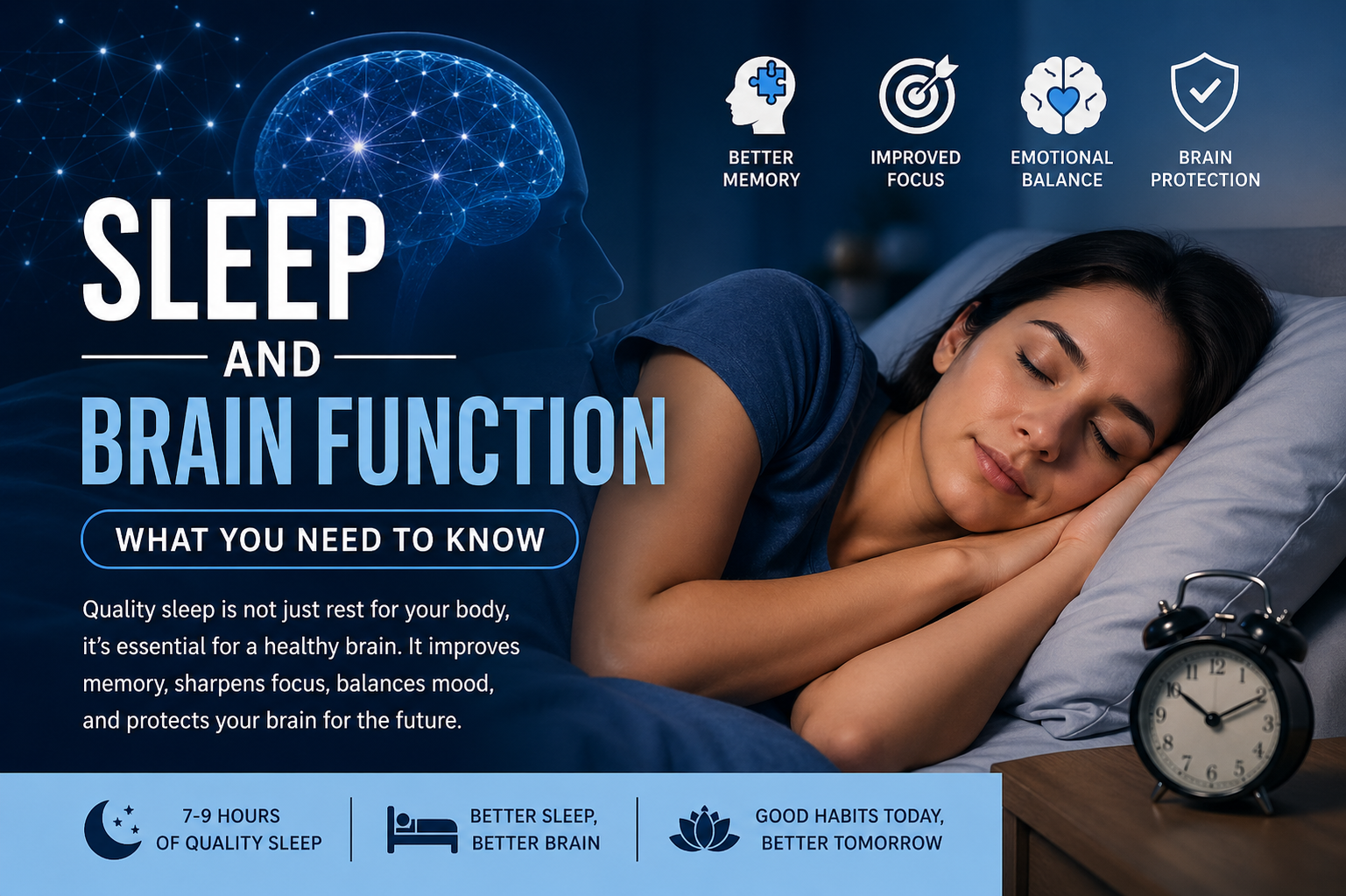
Sleep is not just rest—it’s a powerful process that keeps your brain healthy, sharp, and functioning at its best. In today’s fast-paced lifestyle, many people sacrifice sleep without realizing how deeply it affects brain performance. Let’s understand why sleep is essential and how it impacts your brain
Why Sleep is Important for the Brain
Your brain doesn’t “shut off” during sleep. Instead, it stays active and performs critical functions like:
- Processing and storing memories
- Removing toxins from the brain
- Restoring energy levels
- Strengthening neural connections
Without proper sleep, these functions become impaired, affecting your daily life.
How Sleep Affects Brain Function
1. Memory and Learning
Sleep plays a major role in memory consolidation. While you sleep, your brain processes information from the day and stores it for long-term use. Poor sleep can lead to forgetfulness and difficulty learning new things.
2. Focus and Concentration
Lack of sleep reduces attention span and decision-making ability. Even one night of poor sleep can make you feel distracted and less productive.
. Emotional Balance
Sleep directly affects mood. Sleep deprivation can increase stress, anxiety, and irritability, and over time may contribute to conditions like Depression.
4. Brain Detoxification
During deep sleep, the brain clears out harmful waste proteins. Poor sleep may increase the risk of neurological conditions like Alzheimer’s Disease.
Effects of Poor Sleep on the Brain
Chronic sleep deprivation can lead to:
- Memory loss
- Reduced cognitive performance
- Increased risk of stroke and brain disorders
- Difficulty in problem-solving
- Mental fatigue and brain fog
How Much Sleep Do You Need?
- Adults: 7–9 hours
- Teenagers: 8–10 hours
- Children: 9–12 hours
Getting less than recommended sleep regularly can harm brain health over time.
Tips for Better Sleep and Brain Health
Here are simple ways to improve sleep quality:
- Maintain a fixed sleep schedule
- Avoid mobile phones before bedtime
- Reduce caffeine intake in the evening
- Create a calm and dark sleeping environment
- Exercise regularly
- Practice relaxation techniques like meditation
Final Thoughts
Sleep is essential for a healthy brain and a productive life. It improves memory, enhances focus, stabilizes mood, and protects against serious neurological conditions. Instead of viewing sleep as a luxury, consider it a necessity for your brain’s well-being.
