
Introduction
Sciatica is one of the most common causes of lower back and leg pain. It affects the sciatic nerve, the longest nerve in the human body, which runs from the lower back down to the legs. This condition can cause discomfort ranging from mild pain to severe, disabling symptoms.
The good news? In most cases, sciatica can be treated without surgery if managed correctly and early.
What is Sciatica?
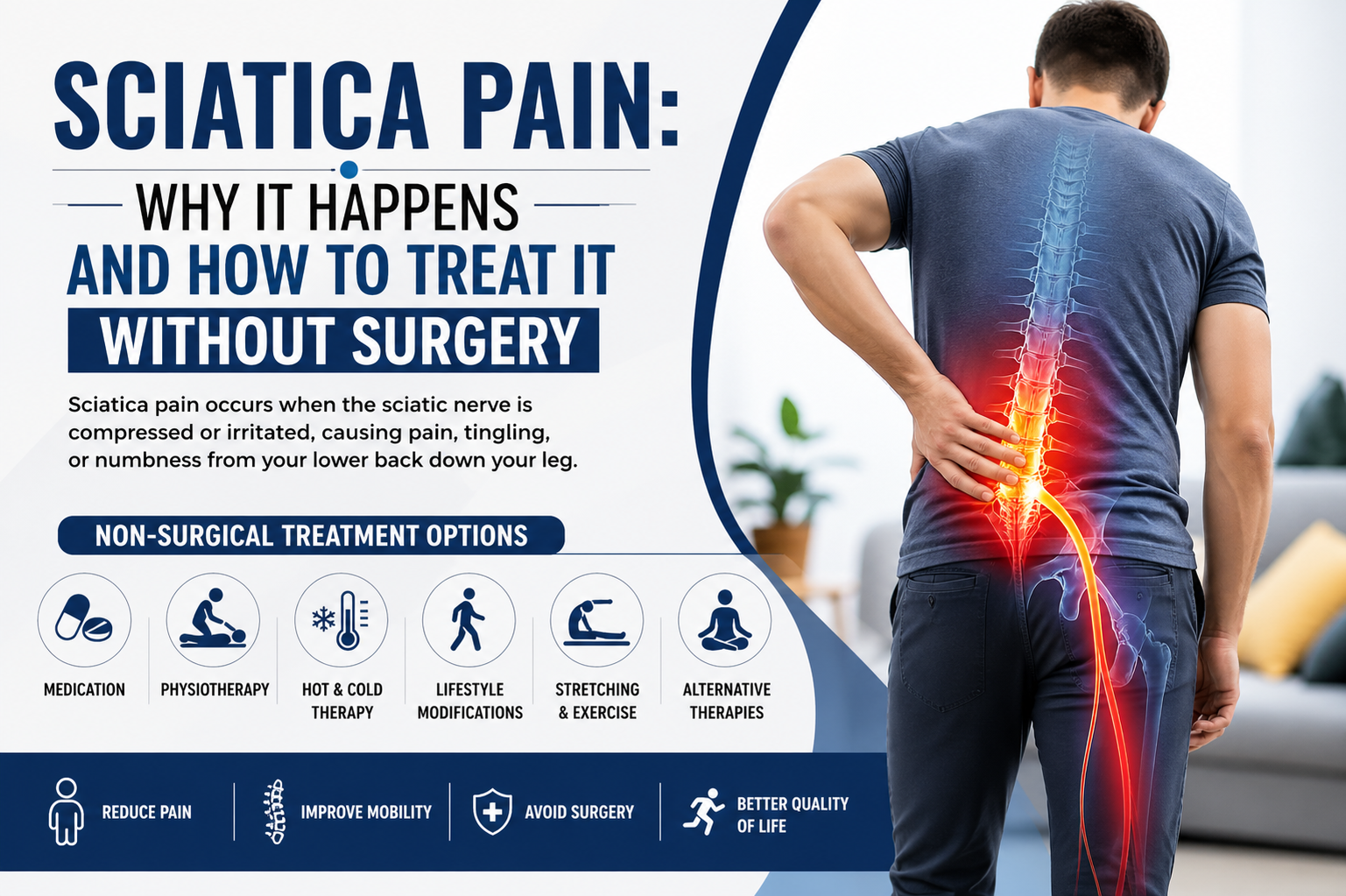
Sciatica is not a disease itself but a symptom of an underlying problem. It occurs when the sciatic nerve gets compressed, irritated, or inflamed.
Common Causes of Sciatica
Sciatica usually develops due to pressure on the nerve. The most common causes include:
- Herniated (Slip) Disc – The most frequent cause
- Spinal Stenosis – Narrowing of the spinal canal
- Piriformis Syndrome – Muscle pressing on the nerve
- Degenerative Disc Disease
- Injury or Trauma to the spine
Symptoms of Sciatica
Sciatica typically affects one side of the body. Common symptoms include:
- Sharp pain from lower back to leg
- Burning or tingling sensation
- Numbness or weakness in the leg
- Pain that worsens while sitting
- Difficulty standing or walking
⚠️ Severe cases may cause loss of bladder or bowel control—this needs immediate medical attention.
How is Sciatica Diagnosed?
Doctors usually diagnose sciatica through:
- Physical examination
- Medical history
- Imaging tests like MRI or CT scan (if needed)
Non-Surgical Treatments for Sciatica
Most patients recover without surgery using these methods:
1. Medications
- Pain relievers (like Ibuprofen)
- Muscle relaxants
- Anti-inflammatory drugs
2. Physiotherapy
A structured exercise plan helps:
- Reduce pain
- Improve flexibility
- Strengthen back muscles
3. Hot and Cold Therapy
- Ice packs reduce inflammation
- Heat therapy relaxes muscles
4. Lifestyle Modifications
- Avoid prolonged sitting
- Maintain proper posture
- Use ergonomic chairs
5. Stretching & Exercise
Simple exercises like:
- Hamstring stretch
- Pelvic tilt
- Knee-to-chest stretch
can significantly relieve symptoms.
6. Alternative Therapies
- Yoga
- Chiropractic care
- Acupuncture
When is Surgery Needed?
Surgery is considered only if:
- Pain persists for more than 6–8 weeks
- Severe nerve damage occurs
- Loss of bladder/bowel control
Prevention Tips
- Maintain a healthy weight
- Exercise regularly
- Lift heavy objects correctly
- Avoid long sitting hours
Conclusion
Sciatica can be painful, but it is highly manageable without surgery in most cases. Early diagnosis, proper treatment, and lifestyle changes play a key role in recovery.
If you experience persistent symptoms, consult a neurosurgeon or spine specialist for proper guidance.
