
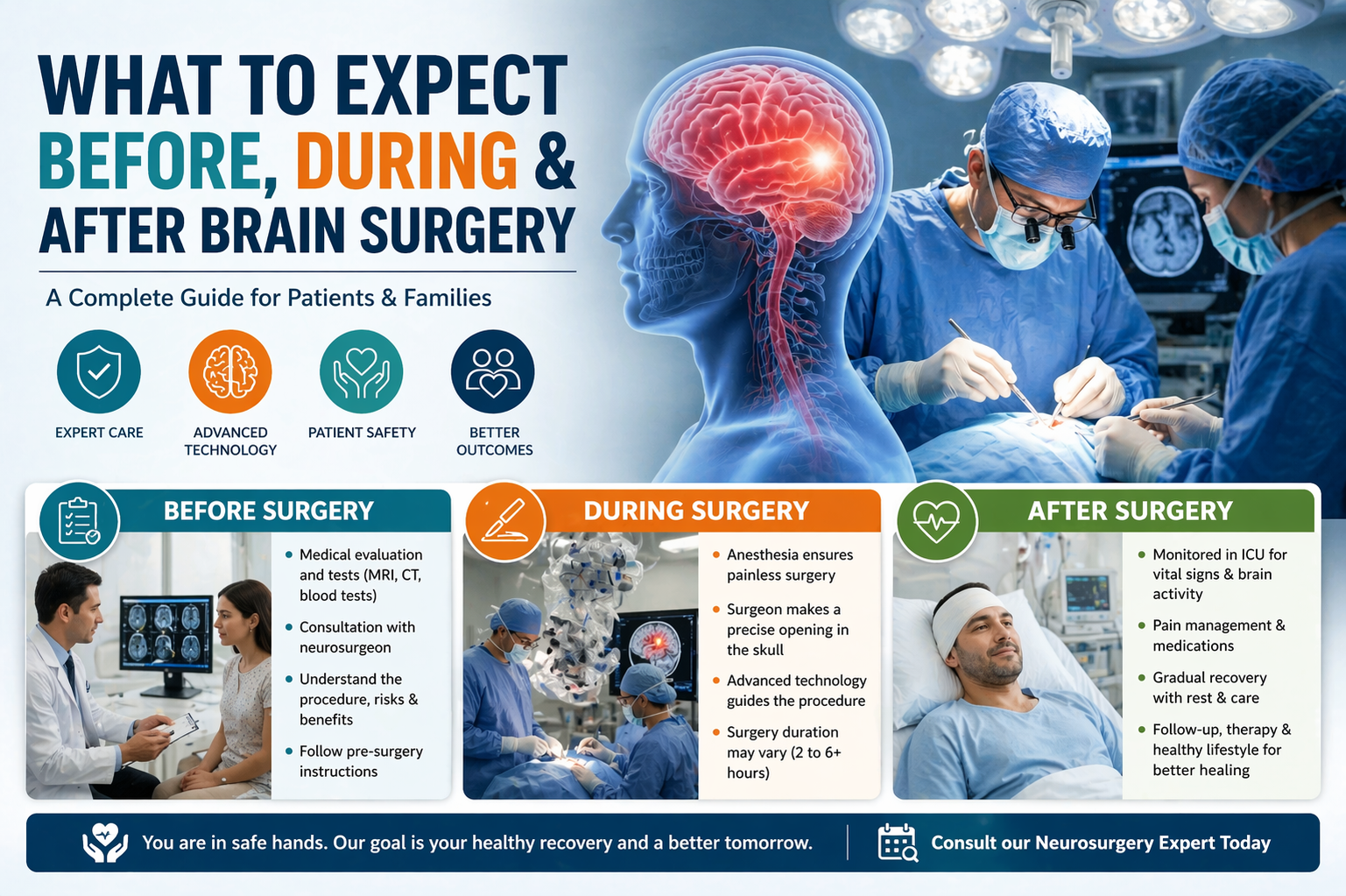
Brain surgery can feel overwhelming, but understanding the process can help reduce fear and build confidence. With advanced medical technology and experienced neurosurgeons, brain surgeries today are safer and more effective than ever.
In this guide, we’ll walk you through what to expect before, during, and after brain surgery.
Before Brain Surgery
Preparation is a crucial step to ensure a safe and successful procedure.
🔍 Medical Evaluation
Before surgery, doctors will perform:
- MRI or CT scans
- Blood tests
- Physical and neurological examinations
👉 These help identify the exact problem and plan the surgery.
Consultation & Planning
- The neurosurgeon will explain the procedure, risks, and expected outcomes
- You can ask questions and clear your doubts
- Consent forms are signed
Pre-Surgery Instructions
- Avoid food and drink for 6–8 hours before surgery
- Stop certain medications (as advised by doctor)
- Arrange for post-surgery care
During Brain Surgery
This is the most critical phase, handled by a specialized medical team.
Anesthesia
- General anesthesia is given so the patient feels no pain
- In some cases, awake brain surgery is performed for better monitoring
Surgical Procedure
- A small portion of the skull is opened (craniotomy)
- The surgeon treats the problem (tumor removal, bleeding control, etc.)
- Advanced tools like microscopes and navigation systems are used
Duration
- Surgery may last 2 to 6 hours or more, depending on complexity
After Brain Surgery
Recovery begins immediately after the procedure.
ICU Monitoring
- Patient is shifted to ICU
- Doctors monitor brain function, breathing, and vital signs
Initial Recovery
- Mild pain, swelling, or fatigue is normal
- Medications are given for pain and infection prevention
Hospital Stay
- Usually ranges from a few days to a couple of weeks
Long-Term Recovery
Healing continues even after discharge.
Rehabilitation
- Physical therapy
- Speech therapy (if needed)
- Regular follow-ups
Recovery Tips
- Get proper rest
- Avoid heavy activities
- Follow doctor’s advice strictly
- Maintain a healthy diet
Possible Risks
Like any major surgery, brain surgery may involve:
- Infection
- Bleeding
- Swelling
- Temporary or permanent neurological changes
👉 However, risks are minimized with expert care and advanced technology.
