
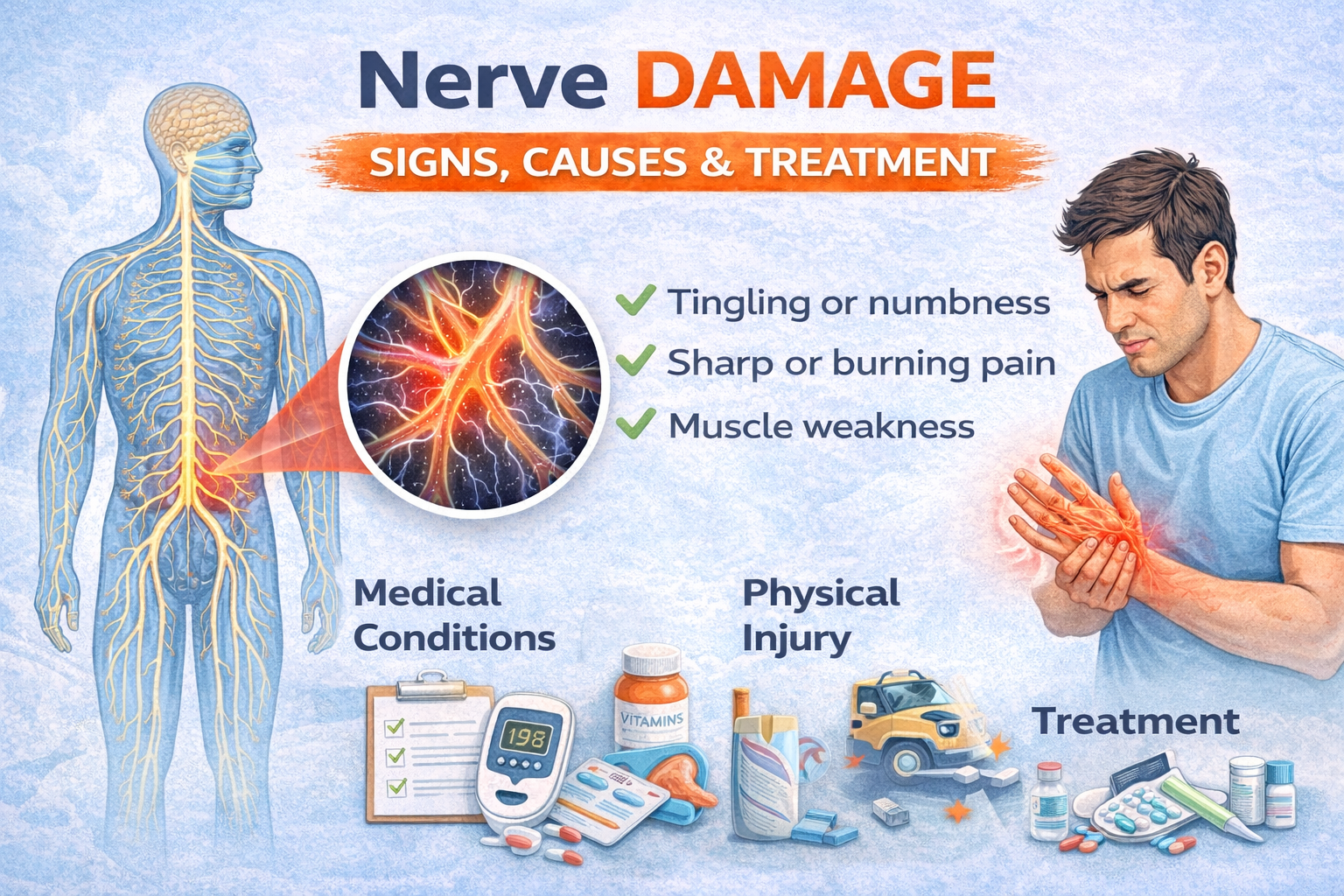
Nerve damage, also known as neuropathy, is a condition that affects the nerves responsible for transmitting signals between the brain, spinal cord, and the rest of the body. When these nerves are damaged, it can disrupt normal body functions and lead to pain, weakness, or numbness.
Understanding the early signs and causes of nerve damage can help in timely diagnosis and effective treatment
What is Nerve Damage?
Nerves play a crucial role in controlling movement, sensation, and bodily functions. When they are injured or not functioning properly, it leads to nerve damage.
There are three main types of nerves affected:
- Sensory nerves – control feeling (pain, touch, temperature)
- Motor nerves – control movement
- Autonomic nerves – control automatic functions (heartbeat, digestion)
Signs & Symptoms of Nerve Damage
Symptoms can vary depending on the type of nerve affected:
Common Symptoms:
- Tingling or “pins and needles” sensation
- Numbness in hands or feet
- Sharp, burning, or shooting pain
- Muscle weakness
- Loss of coordination
Severe Symptoms:
- Paralysis (in extreme cases)
- Difficulty walking
- Loss of bladder or bowel control
- Sensitivity to touch
👉 These symptoms may develop gradually or suddenly.
Causes of Nerve Damage
Nerve damage can occur due to various reasons:
Medical Conditions:
- Diabetes (most common cause)
- Infections
- Autoimmune diseases
- Vitamin deficiencies
Physical Causes:
- Injury or trauma
- Repetitive strain
- Pressure on nerves (like slip disc)
Other Causes:
- Alcohol abuse
- Exposure to toxins
- Side effects of certain medications
Diagnosis
Doctors may recommend:
- Physical and neurological examination
- Blood tests
- MRI or CT scans
- Nerve conduction studies
👉 Early diagnosis helps prevent further damage.
Treatment Options
Treatment depends on the cause and severity:
Non-Surgical Treatment:
- Medications for pain relief
- Physiotherapy
- Vitamin supplements
- Lifestyle changes
Surgical Treatment:
In severe cases:
- Surgery to relieve pressure on nerves
- Repair of damaged nerves
Recovery & Management
Recovery varies from person to person:
Timeline:
- Mild cases: few weeks
- Moderate: months
- Severe: long-term management
Tips for Better Recovery:
- Control underlying conditions (like diabetes)
- Follow prescribed medications
- Stay physically active
- Avoid alcohol and smoking
- Maintain a healthy diet
Prevention Tips
- Maintain healthy blood sugar levels
- Take proper posture
- Avoid repetitive strain
- Ensure proper nutrition (Vitamin B12)
- Exercise regularly
Final Thoughts
Nerve damage can significantly affect your quality of life if left untreated. Recognizing early symptoms and seeking medical help can prevent complications and improve recovery.
If you experience persistent numbness, pain, or weakness, consult a specialist immediately for proper diagnosis and care.
