
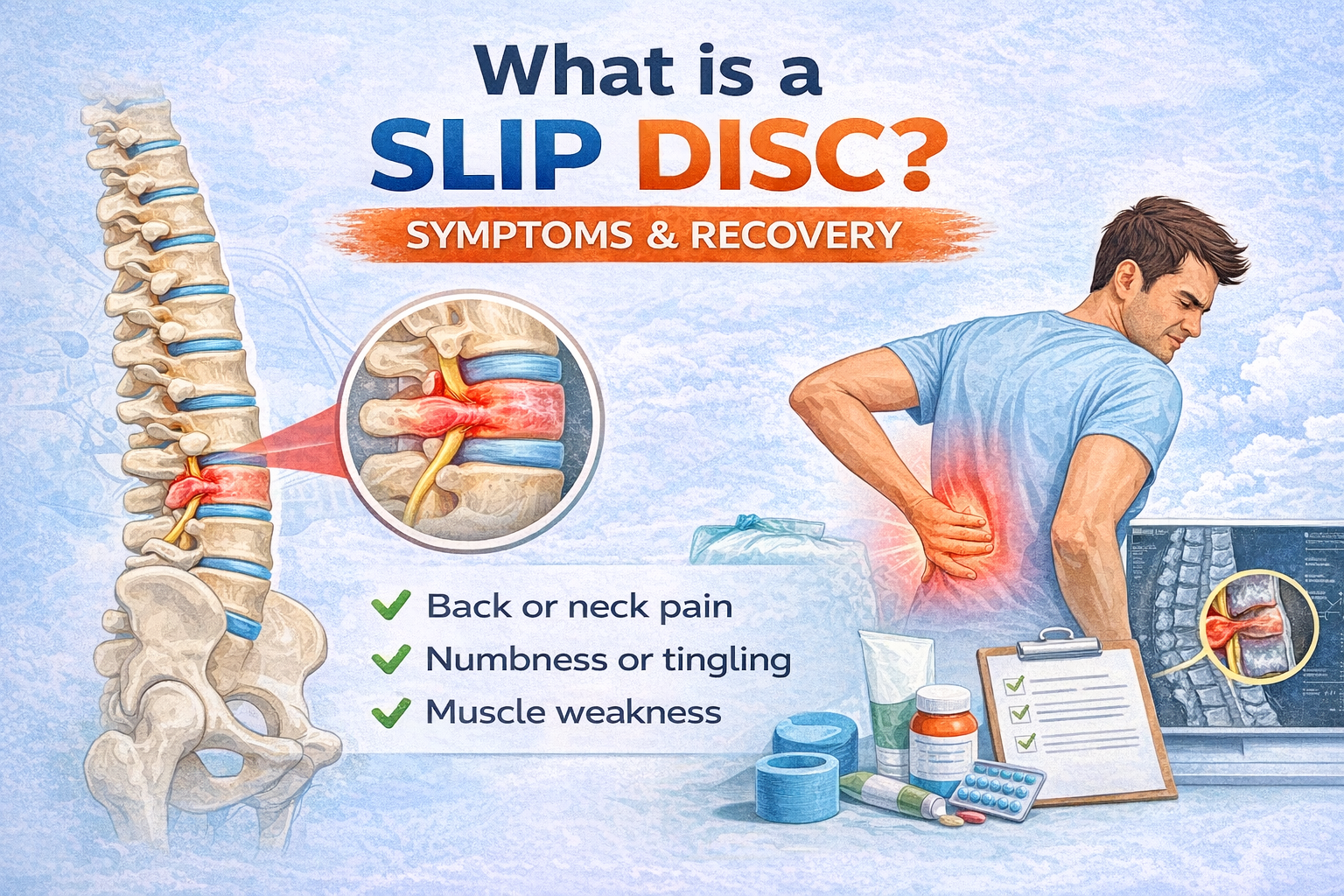
A slip disc, also known as a herniated or prolapsed disc, is a common spine condition that can cause pain, discomfort, and restricted movement. It usually affects the lower back but can also occur in the neck.
Understanding its symptoms and recovery process can help you take timely action and prevent complications.
What is a Slip Disc?
Your spine is made up of small bones (vertebrae) separated by soft cushions called discs. These discs act as shock absorbers and allow flexibility.
A slip disc occurs when:
- The inner soft portion of the disc pushes out
- It presses on nearby nerves
👉 This leads to pain, numbness, or weakness in the affected area.
⚠️ Common Causes of Slip Disc
- Poor posture
- Sitting for long hours
-
- Sudden movements or injury
- Aging and wear & tear
- Lack of exerciseHeavy lifting
. Symptoms of Slip Disc
Symptoms may vary depending on the location, but common signs include:
🔹 Lower Back (Most Common)
- Severe lower back pain
- Pain radiating to legs (sciatica)
- Numbness or tingling
- Muscle weakness
🔹 Neck (Cervical Spine)
- Neck pain
- Pain in shoulders or arms
- Tingling in fingers
- Reduced neck movement
👉 In severe cases, it can affect mobility and daily activities.
When Should You See a Doctor?
Consult a specialist if:
- Pain lasts more than a few days
- Numbness or weakness increases
- Difficulty in walking or standing
- Loss of bladder or bowel control (emergency 🚨)
🏥 Diagnosis
Doctors may recommend:
- Physical examination
- MRI or CT scan
- X-rays
👉 These help confirm the location and severity of the disc problem.
💊 Treatment Options
🟢 Non-Surgical Treatment (Most Cases)
- Pain relief medications
- Physiotherapy
- Rest and posture correction
- Heat/ice therapy
👉 Around 80–90% of cases improve without surgery
. Surgical Treatment (Severe Cases)
Surgery may be required if:
- Pain is severe and persistent
- Nerve damage is worsening
- Non-surgical methods fail
Modern options include:
- Minimally invasive spine surgery
- Endoscopic procedures
Recovery & Healing
Recovery depends on the severity, but generally:
⏳ Timeline
- Mild cases: 2–6 weeks
- Moderate cases: 6–12 weeks
- Post-surgery: few weeks to months
Tips for Faster Recovery
- Maintain proper posture
- Avoid heavy lifting
- Do doctor-recommended exercises
- Stay active but avoid strain
- Follow physiotherapy regularly
💡 Prevention Tips
- Sit with correct posture
- Take breaks during long sitting hours
- Exercise regularly
- Maintain a healthy weight
- Use proper techniques while lifting
Final Thoughts
A slip disc can be painful, but with early diagnosis and proper care, most people recover successfully without surgery. Ignoring symptoms can worsen the condition, so timely treatment is important.
If you experience persistent back or neck pain, consult a specialist for the right guidance and care.
