
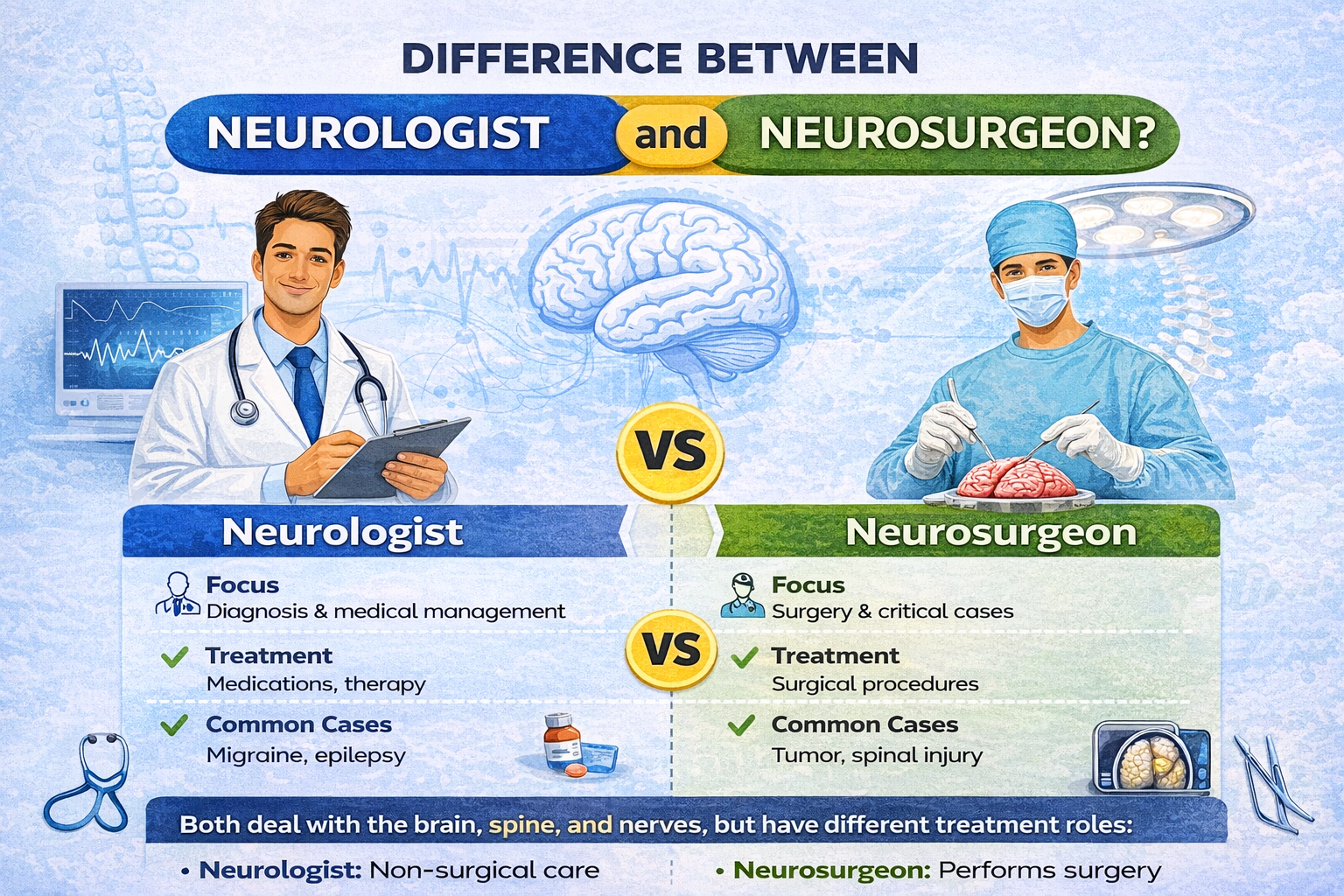
When it comes to brain and nervous system problems, many people get confused between a neurologist and a neurosurgeon. Both specialists deal with similar organs—like the brain, spine, and nerves—but their roles, training, and treatment approaches are quite different.
In this article, we’ll clearly explain the difference so you know whom to consult and whe
What is a Neurologist?
A neurologist is a doctor who diagnoses and treats disorders of the nervous system without surgery.
✅ Conditions Treated by Neurologists:
- Headaches & migraines
- Epilepsy (seizures)
- Stroke
- Parkinson’s disease
- Nerve pain (neuropathy)
- Multiple sclerosis
Treatment Approach:
Neurologists mainly use:
- Medications
- Lifestyle changes
- Non-invasive therapies
👉 They focus on managing and controlling neurological conditions.
What is a Neurosurgeon?
A neurosurgeon is a specialist trained to perform surgery on the brain, spine, and nerves.
✅ Conditions Treated by Neurosurgeons:
- Brain tumors
- Spine disorders (slip disc, spinal stenosis)
- Head injuries
- Brain hemorrhage (bleeding)
- Nerve compression
🏥 Treatment Approach:
Neurosurgeons use:
- Surgical procedures
- Advanced techniques (minimally invasive surgery, robotics)
- Emergency interventions
👉 They treat conditions that may require operation or critical care.
Key Differences at a Glance
| Feature | Neurologist | Neurosurgeon |
|---|---|---|
| Treatment Type | Non-surgical | Surgical + Non-surgical |
| Focus | Diagnosis & medical management | Surgery & critical cases |
| Common Cases | Migraine, epilepsy | Tumor, spinal injury |
| Tools Used | Medicines, therapy | Surgery, advanced instruments |
When Should You See a Neurologist?
Visit a neurologist if you have:
- Frequent headaches
- Dizziness or memory problems
- Numbness or tingling
- Seizures
When Should You See a Neurosurgeon?
Consult a neurosurgeon if:
- You are advised surgery by a neurologist
- Severe head or spine injury occurs
- There is a brain tumor or bleeding
- Chronic back pain not improving with treatment
Do Neurologists and Neurosurgeons Work Together?
Yes! In many cases:
- A neurologist first diagnoses the problem
- If surgery is needed, they refer you to a neurosurgeon
👉 Both specialists often work as a team for the best patient care.
Final Thoughts
Understanding the difference between a neurologist and a neurosurgeon can help you seek the right treatment at the right time. While neurologists focus on non-surgical care, neurosurgeons handle surgical and complex conditions.
If you experience any neurological symptoms, don’t ignore them—early diagnosis can make a huge difference in recovery.
