
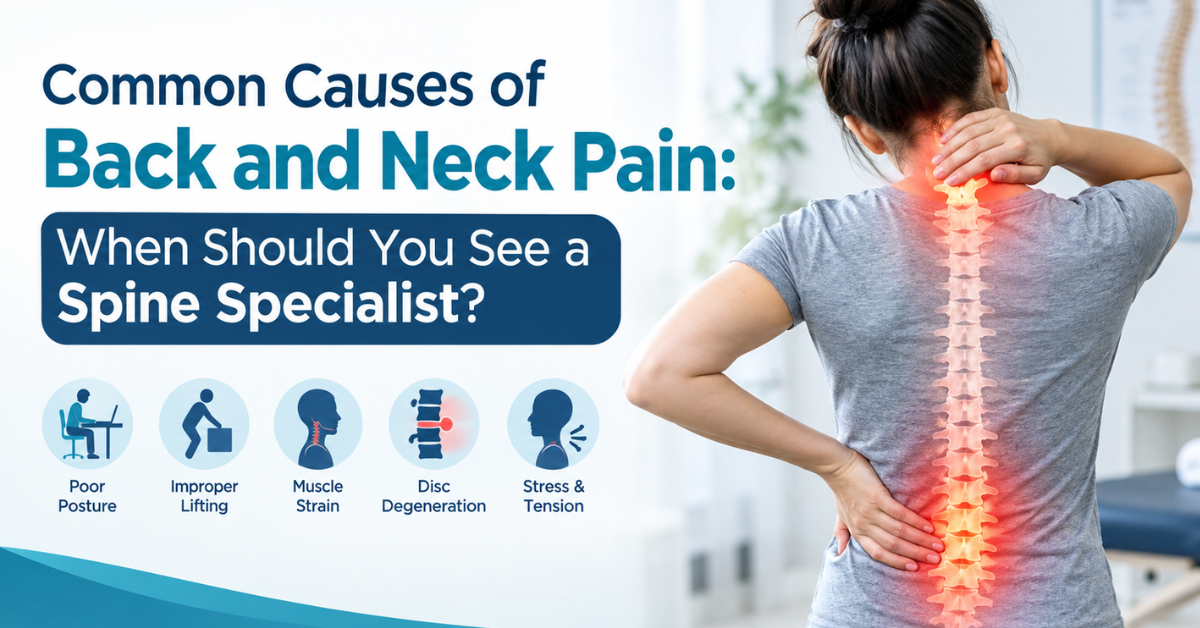
Back and neck pain are common problems that can affect people of almost every age. Long working hours, poor posture, lack of physical activity, injuries, and age-related changes in the spine are some of the most common reasons for discomfort. While mild pain may improve with adequate rest and simple lifestyle changes, persistent or severe pain may indicate an underlying spinal or neurological condition. Knowing the possible causes and understanding when to consult a specialist can help you receive timely treatment.
Common Causes of Back and Neck Pain
Poor Posture and Prolonged Sitting
One of the leading causes of back and neck pain is poor posture. Spending several hours sitting at a desk, working on a computer, driving, or using a mobile phone can put additional pressure on the neck and spine. Forward-head posture and slouching can gradually cause muscle tension, stiffness, and discomfort. Taking regular breaks, maintaining proper sitting posture, and adjusting your workstation can help reduce unnecessary strain.
Muscle Strain and Injuries
Sudden movements, heavy lifting, excessive exercise, sports injuries, or accidents can cause muscle strains and ligament injuries. The pain may be localized to the back or neck and can sometimes be associated with stiffness or difficulty moving. Minor injuries may improve with rest and appropriate treatment, but persistent pain should be evaluated by a healthcare professional.
Slip Disc or Herniated Disc
The discs between the vertebrae act as cushions and help the spine move comfortably. When a disc becomes damaged, bulges, or herniates, it can press against nearby nerves. This may result in back or neck pain, numbness, tingling, or weakness in the arms or legs. Depending on the severity, treatment may involve medicines, physiotherapy, lifestyle modifications, or surgery in selected cases.
Cervical and Lumbar Spondylosis
With increasing age, normal wear and tear can affect the discs and joints of the spine. Cervical spondylosis affects the neck, while lumbar spondylosis affects the lower back. Symptoms can include stiffness, pain, reduced flexibility, and sometimes nerve-related problems. Early diagnosis can help manage symptoms and prevent them from affecting everyday activities.
Sciatica and Nerve Compression
Sciatica occurs when the sciatic nerve becomes irritated or compressed. It commonly causes pain that travels from the lower back through the buttock and into the leg. Some individuals may also experience tingling, numbness, or weakness. Nerve-related symptoms should not be ignored, particularly when they become severe or progressively worse.
When Should You See a Spine Specialist?
Occasional back or neck discomfort does not always require specialist treatment. However, you should consider consulting a spine specialist if your pain continues for several weeks, repeatedly returns, becomes severe, or interferes with sleeping, walking, working, or normal daily activities.
You should seek medical evaluation if you experience persistent pain along with numbness, tingling, muscle weakness, pain radiating into the arms or legs, difficulty maintaining balance, or symptoms following a significant injury. Sudden weakness, loss of bladder or bowel control, or severe symptoms after an accident require urgent medical attention.
Does Back Pain Always Require Surgery?
Back or neck pain does not necessarily mean that surgery is required. In many cases, doctors initially recommend conservative treatment such as medicines, physiotherapy, exercise, posture correction, and lifestyle modifications. Spine surgery may be considered when conservative treatment does not provide adequate relief or when there is significant nerve compression, spinal instability, or another condition that requires surgical management.
If you are searching for “spine surgery near me,” choosing a healthcare facility should involve more than simply considering its location. Look for experienced specialists, proper diagnostic facilities, and a comprehensive approach to spine and neurological conditions.
Sometimes back and neck symptoms may be connected to the nervous system. If you are experiencing symptoms such as persistent nerve pain, numbness, weakness, dizziness, headaches, or coordination problems, consulting a qualified neurologist in Hisar can help determine the underlying cause and guide you toward appropriate treatment.
Take Care of Your Spine Health
Maintaining a healthy spine requires consistent attention to posture, physical activity, body weight, and daily habits. Avoid prolonged sitting, take regular movement breaks, use proper lifting techniques, and follow an exercise routine suitable for your health condition.
Most importantly, do not ignore persistent or worsening pain. Early evaluation can help identify the underlying problem and allow appropriate treatment to begin at the right time. Whether you need conservative care, neurological evaluation, or specialized spine treatment, consulting a qualified healthcare professional can help you make an informed decision about your spinal health.
