
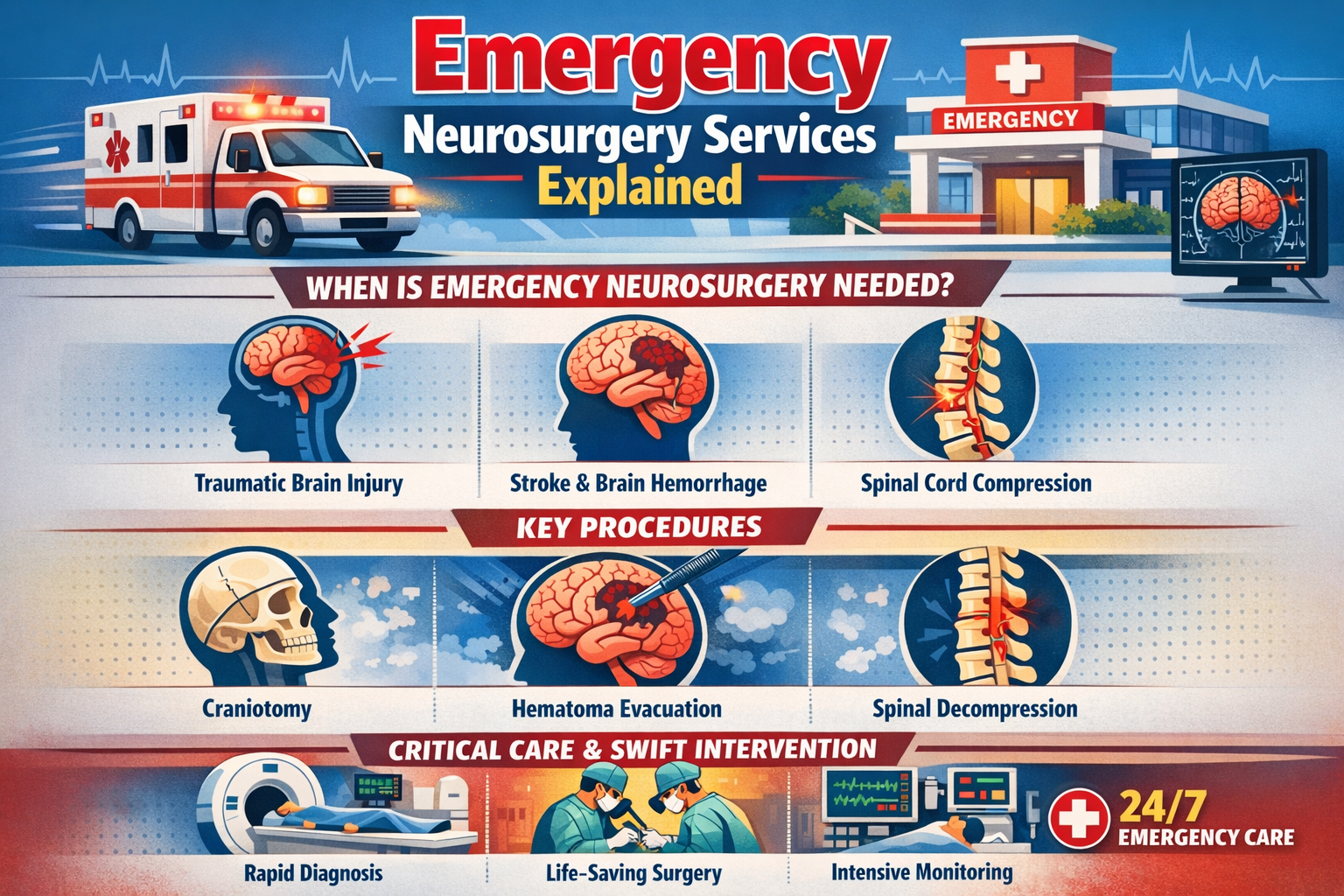
Medical emergencies can happen anytime, and when it comes to the brain or spine, even a few minutes can make a life-changing difference. Emergency neurosurgery services are designed to provide immediate, specialized care for critical neurological conditions that require urgent intervention.
Understanding these services can help patients and families act quickly and make informed decisions during emergencies.
What Is Emergency Neurosurgery?
Emergency neurosurgery refers to urgent surgical procedures performed to treat life-threatening conditions affecting the brain, spinal cord, or nervous system.
These surgeries are usually unplanned and performed under critical situations where delays can lead to serious complications or even death.
When Is Emergency Neurosurgery Needed?
Emergency neurosurgery is required in situations such as:
- Severe head injuries (traumatic brain injury)
- Brain hemorrhage or bleeding
- Stroke (especially hemorrhagic stroke)
- Spinal cord injuries
- Brain swelling (edema)
- Skull fractures
- Acute nerve compression
- Sudden loss of consciousness
If a patient shows serious neurological symptoms, immediate medical attention is crucial.
Common Emergency Neurosurgical Procedures
1. Craniotomy
A craniotomy involves temporarily removing a part of the skull to access the brain. It is performed to:
- Remove blood clots
- Treat brain tumors
- Relieve pressure on the brain
2. Decompressive Surgery
This procedure reduces pressure inside the skull caused by swelling or bleeding. It helps prevent further brain damage.
3. Spinal Decompression Surgery
Used in cases of severe spinal cord compression due to trauma or disc issues, this surgery relieves pressure on nerves.
4. Hematoma Removal
Blood clots formed due to head injury or bleeding are removed to restore normal brain function.
Signs You Should Never Ignore
Recognizing warning signs early can save lives. Seek emergency care if someone experiences:
- Sudden severe headache
- Loss of consciousness
- Seizures
- Weakness or numbness in limbs
- Difficulty speaking
- Vision problems
- Persistent vomiting
- Confusion or disorientation
These symptoms may indicate serious brain or spinal conditions.
What Happens in the Emergency Room?
When a patient arrives at the emergency department:
- Immediate assessment is done
- Vital signs are stabilized
- Imaging tests like CT scan or MRI are performed
- Neurosurgeon evaluates the condition
- Decision for surgery is made quickly
Time is critical, and medical teams act rapidly to prevent further damage.
Risks of Emergency Neurosurgery
Since these procedures are performed under urgent conditions, risks may include:
- Infection
- Bleeding
- Nerve damage
- Swelling
- Temporary or permanent neurological deficits
However, the benefits of saving life and preventing severe damage often outweigh the risks.
Recovery After Emergency Neurosurgery
Recovery depends on:
- Severity of the condition
- Type of surgery performed
- Patient’s age and overall health
Some patients recover quickly, while others may need long-term rehabilitation, including:
- Physical therapy
- Speech therapy
- Cognitive rehabilitation
Importance of Timely Treatment
In neurological emergencies, “time is brain.” Delays in treatment can lead to permanent brain damage or loss of function.
Quick action can:
- Save lives
- Reduce complications
- Improve recovery outcomes
Conclusion
Emergency neurosurgery services play a crucial role in managing life-threatening brain and spinal conditions. These services require quick diagnosis, skilled surgeons, and advanced medical facilities.
If you ever notice serious neurological symptoms in yourself or someone else, do not delay — seek immediate medical attention. Acting fast can make the difference between recovery and long-term complications.
