
A stroke is a medical emergency that can happen when blood flow to part of the brain is interrupted or when a blood vessel in the brain bursts. Because brain cells can begin to suffer damage within minutes, recognizing the warning signs and getting immediate medical attention can make a significant difference in recovery. Knowing the symptoms of stroke and acting quickly can help reduce the risk of long-term disability and serious complications.
What Is a Stroke?
A stroke occurs when the brain does not receive enough blood and oxygen. The two main types are ischemic stroke, caused by a blocked blood vessel, and hemorrhagic stroke, caused by bleeding in or around the brain.
Regardless of the type, a suspected stroke requires urgent medical evaluation. Do not wait for symptoms to improve on their own or try home remedies.
Recognize Stroke Symptoms With FAST
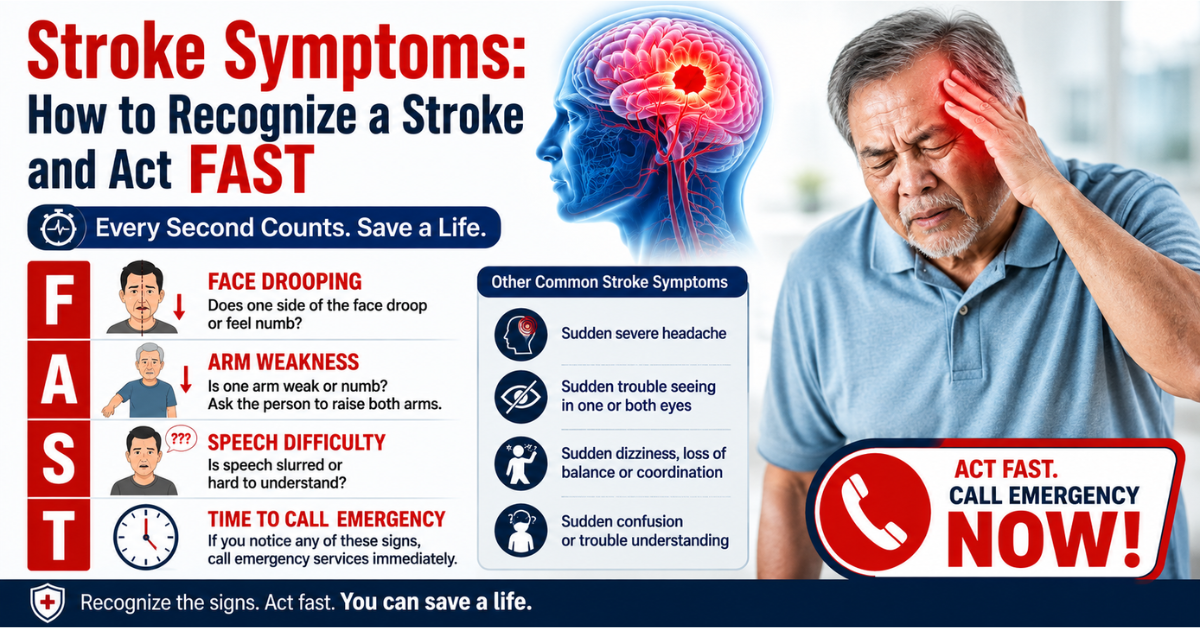
One of the easiest ways to remember common stroke symptoms is the FAST method:
F – Face Drooping:
Ask the person to smile. One side of the face may appear numb or droop, and the smile may look uneven.
A – Arm Weakness:
Ask the person to raise both arms. If one arm becomes weak, numb, or starts drifting downward, it may be a warning sign of stroke.
S – Speech Difficulty:
Listen for slurred, unclear, or unusual speech. The person may also have difficulty understanding simple sentences or communicating properly.
T – Time to Act:
If any of these symptoms appear suddenly, seek emergency medical help immediately. Note the time when the symptoms first started, as this information can be important for medical treatment.
Other possible stroke symptoms include sudden vision problems, severe dizziness, difficulty walking, loss of balance, confusion, numbness on one side of the body, or a sudden severe headache without an obvious cause.
Why Immediate Treatment Matters
Stroke treatment is often time-sensitive. Depending on the type of stroke, how long ago the symptoms started, and the patient’s overall condition, doctors may consider different emergency treatment options.
The sooner a patient reaches a hospital with appropriate neurological and emergency care, the sooner doctors can assess the condition and determine the right treatment approach. Never drive yourself if you are experiencing possible stroke symptoms. Contact emergency medical services whenever possible.
Even if symptoms disappear after a few minutes, medical evaluation is still important. A temporary episode may be a transient ischemic attack (TIA), which can be an important warning that a major stroke could occur in the future.
Who Is at Risk of Stroke?
Stroke can affect people of different ages, although the risk generally increases with age. Several factors can increase the likelihood of stroke, including high blood pressure, diabetes, high cholesterol, smoking, obesity, heart disease, physical inactivity, and a previous stroke or TIA.
Managing these risk factors through regular medical check-ups, prescribed medications, a balanced diet, physical activity, and healthy lifestyle choices can help reduce stroke risk.
When Should You See a Neurologist?
If you or a family member experiences symptoms such as sudden weakness, facial drooping, speech difficulties, unexplained numbness, seizures, severe dizziness, or other sudden neurological changes, urgent medical assessment is important.
For ongoing neurological concerns or stroke-related follow-up, consulting a qualified neurologist in Hisar can help with diagnosis, treatment planning, rehabilitation guidance, and prevention of future neurological complications.
If you are searching for the best neurologist in Hisar, consider choosing a specialist with appropriate qualifications, experience in managing neurological conditions, access to diagnostic facilities, and a multidisciplinary approach to patient care.
Don’t Ignore Stroke Warning Signs
A stroke can happen suddenly, and every minute can matter. Remember FAST: Face drooping, Arm weakness, Speech difficulty, Time to act. If you notice these warning signs, seek emergency medical attention immediately rather than waiting for the symptoms to disappear.
Early recognition, prompt diagnosis, and appropriate treatment can play an important role in improving outcomes after stroke. If you have concerns about stroke symptoms or neurological health, speak with a qualified neurological specialist and get the appropriate medical evaluation without delay.
