
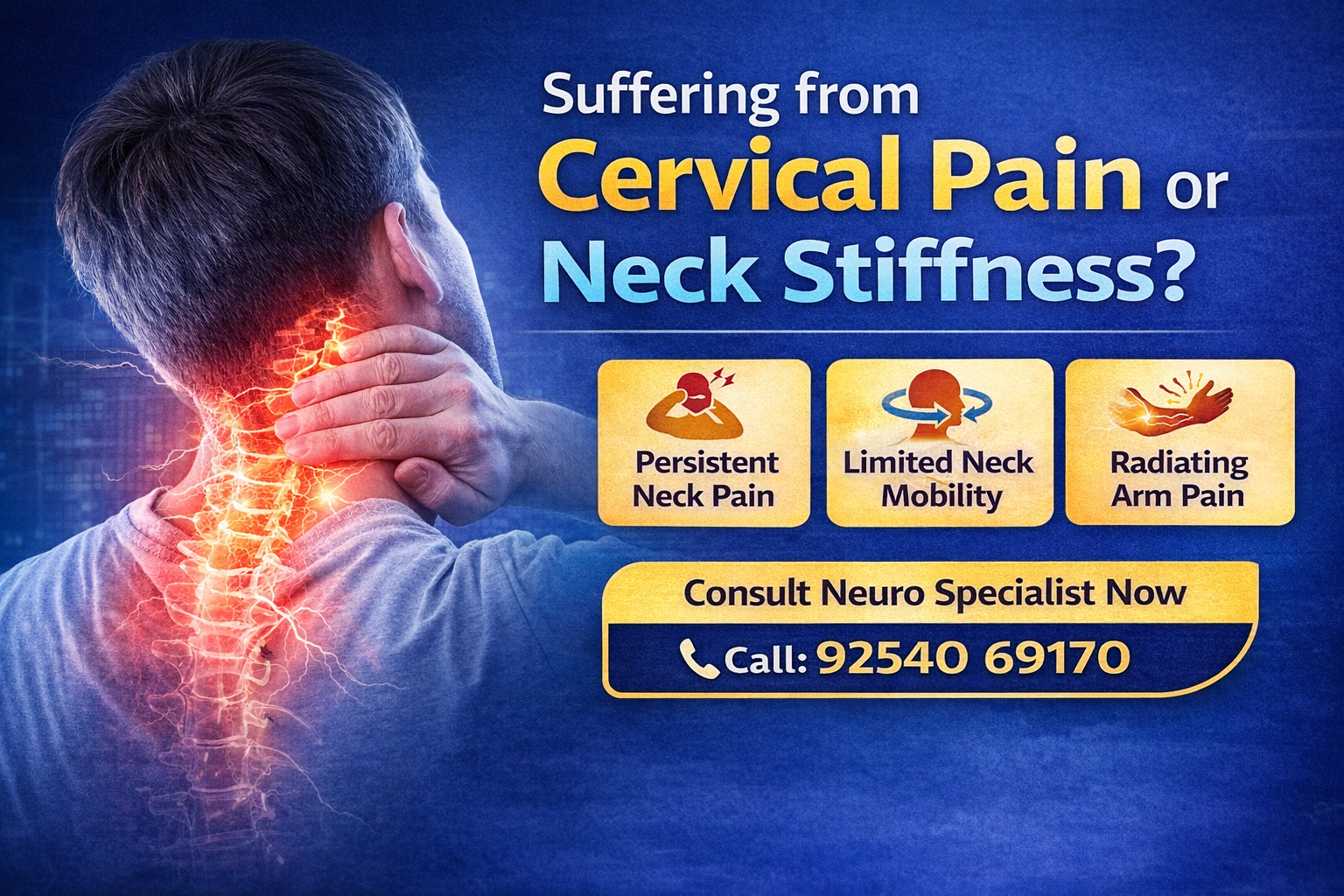
Cervical pain or neck stiffness has quietly become one of the most common health complaints in modern life. Whether we are glued to our laptops, scrolling endlessly on smartphones, or sitting for long hours at a desk, our necks are paying the price. What starts as mild discomfort often turns into persistent pain, restricted movement, and sometimes even nerve-related symptoms. So, the big question is—should we ignore it or act early?
Understanding Cervical Pain and Neck Stiffness
Cervical pain refers to discomfort arising from the cervical spine—the uppermost part of the spine that supports the head and allows flexible movement. Neck stiffness, on the other hand, limits mobility and often comes with pain, muscle tightness, or spasms.
Think of your neck like the stem of a flower holding a heavy bloom. When overstressed, it bends, strains, and eventually protests.
What Is the Cervical Spine?
The cervical spine consists of seven vertebrae (C1–C7), intervertebral discs, nerves, muscles, and ligaments. Together, they:
Support the weight of the head
Enable rotation and bending
Protect the spinal cord
Any imbalance in this finely tuned system can lead to pain.
Why the Neck Is So Vulnerable
Unlike the lower back, the neck is designed for mobility, not load-bearing. Constant forward head posture, poor ergonomics, and sudden movements make it highly susceptible to injury.
Common Causes of Cervical Pain
Cervical pain rarely has a single cause. Often, it’s a combination of lifestyle habits and underlying spinal changes.
Poor Posture and Screen Time
Hours spent looking down at phones or leaning toward computer screens create excessive strain on cervical muscles. This condition, often called “tech neck,” is now a leading cause of neck stiffness across all age groups.
Muscle Strain and Overuse
Sudden jerky movements, improper sleeping positions, or lifting heavy objects incorrectly can overstretch neck muscles, leading to inflammation and spasms.
Cervical Spondylosis
Cervical spondylosis is an age-related degenerative condition where discs lose hydration and flexibility. This leads to stiffness, pain, and sometimes nerve compression.
Slip Disc and Nerve Compression
A bulging or herniated cervical disc can press on nearby nerves, causing pain that radiates to the shoulders, arms, or fingers—often accompanied by tingling or numbness.
Role of Aging in Cervical Problems
As we age, wear and tear of the cervical spine is inevitable. However, early care and correct posture can significantly slow down this process.
Symptoms You Should Not Ignore
Pain is the body’s alarm system. Ignoring it is like switching off a fire alarm without checking for fire.
Early Warning Signs
Mild neck pain or stiffness
Difficulty turning the head
Shoulder tightness
Occasional headaches
Advanced and Serious Symptoms
Radiating pain to arms
Numbness or tingling in fingers
Muscle weakness
Loss of balance
Severe headaches
These symptoms demand immediate medical attention.
How Cervical Pain Affects Daily Life
Cervical pain doesn’t just hurt—it disrupts sleep, reduces work productivity, and affects mood. Over time, chronic pain can lead to anxiety, irritability, and reduced quality of life.
Diagnosis: Finding the Root Cause
Proper diagnosis is the foundation of effective treatment.
Clinical Examination
A detailed neurological examination helps assess muscle strength, reflexes, posture, and range of motion.
Imaging Tests (X-ray, MRI, CT Scan)
Advanced imaging reveals disc degeneration, nerve compression, spinal alignment issues, or structural abnormalities.
Advanced Treatment Options
The good news? Most cervical problems are treatable without surgery.
Medications and Pain Management
Anti-inflammatory drugs, muscle relaxants, and nerve pain medications help reduce pain and inflammation.
Physiotherapy and Rehabilitation
Targeted exercises strengthen neck muscles, improve flexibility, and correct posture—acting like a reset button for your spine.
Lifestyle Modifications
Ergonomic workstation setup
Proper pillow and mattress
Regular breaks from screens
Stress management
Small changes make a big difference.
Interventional Pain Procedures
For persistent pain, injections like nerve blocks or epidural steroid injections may provide long-term relief.
When Surgery Becomes Necessary
Surgery is considered only when:
Conservative treatment fails
There is progressive nerve damage
Severe spinal cord compression exists
Modern surgical techniques are safe, precise, and highly effective.
Prevention Tips for Cervical Pain
Prevention is easier than cure:
Maintain upright posture
Stretch regularly
Avoid prolonged screen use
Stay physically active
Your neck will thank you.
When to Consult a Neuro Specialist
If pain persists beyond a few weeks, worsens, or includes neurological symptoms, consulting a neuro specialist is crucial. Early intervention prevents long-term damage.
Conclusion
Cervical pain and neck stiffness are not just minor inconveniences—they are warning signs from your body. Ignoring them can turn a manageable issue into a chronic condition. By understanding the causes, recognizing symptoms early, and opting for timely treatment, we can protect our spine and preserve our quality of life. After all, a healthy neck supports not just the head—but the life we live.
❓ FAQs
Q1. Is cervical pain permanent?
No, most cases improve with proper treatment, posture correction, and physiotherapy.
Q2. Can cervical pain cause headaches?
Yes, cervical issues are a common cause of tension and cervicogenic headaches.
Q3. Is surgery always required for cervical problems?
Not at all. Surgery is needed only in severe or progressive cases.
Q4. Does sleeping position affect neck pain?
Absolutely. Poor pillow height and sleeping posture can worsen symptoms.
Q5. How long does cervical pain take to heal?
Mild cases improve in weeks, while chronic conditions may need longer, structured care.
