
A stroke is a medical emergency that demands immediate attention. Every minute matters. When blood flow to the brain is interrupted, brain cells begin to die within minutes. Recognizing the warning signs early and responding quickly can mean the difference between recovery and permanent disability — or even life and death. In this article, we explore the key warning signs of stroke, why rapid action is critical, and what steps to take during an emergency.
What Is a Stroke?
A stroke occurs when the brain’s blood supply is disrupted. The brain relies on a constant flow of oxygen-rich blood. When this supply is blocked or reduced, brain tissue is damaged. There are two main types of stroke:
-
Ischemic stroke: Caused by a blockage in a blood vessel supplying the brain
-
Hemorrhagic stroke: Caused by bleeding in or around the brain
Both types are serious and require urgent medical care.
Why Early Recognition Matters
Think of the brain like a high-performance engine that cannot run without fuel. When a stroke happens, the “fuel line” is suddenly cut off. The longer the brain goes without oxygen, the more damage occurs. Early treatment can:
-
Reduce brain injury
-
Improve survival rates
-
Increase chances of full recovery
-
Minimize long-term disability
That is why recognizing warning signs is not just helpful — it is lifesaving.
Common Warning Signs of Stroke
Stroke symptoms often appear suddenly. Here are the most important signs to watch for:
Sudden Numbness or Weakness
One of the most recognizable signs is sudden weakness or numbness, especially on one side of the body. This may affect:
-
The face
-
An arm
-
A leg
If one side of the face droops or an arm cannot be lifted properly, it could signal a stroke.
Confusion and Difficulty Speaking
A person experiencing a stroke may suddenly struggle to speak or understand speech. Words may come out slurred or jumbled. They might appear confused or unable to follow simple instructions.
Vision Problems
Sudden trouble seeing in one or both eyes is another warning sign. Vision may become blurred, double, or partially lost.
Loss of Balance or Coordination
A stroke can disrupt the brain’s control over movement. This may cause dizziness, difficulty walking, or a sudden loss of balance and coordination.
Severe Headache
A sudden, intense headache with no known cause — sometimes described as the worst headache of one’s life — may indicate a hemorrhagic stroke.
The FAST Method: A Simple Stroke Test
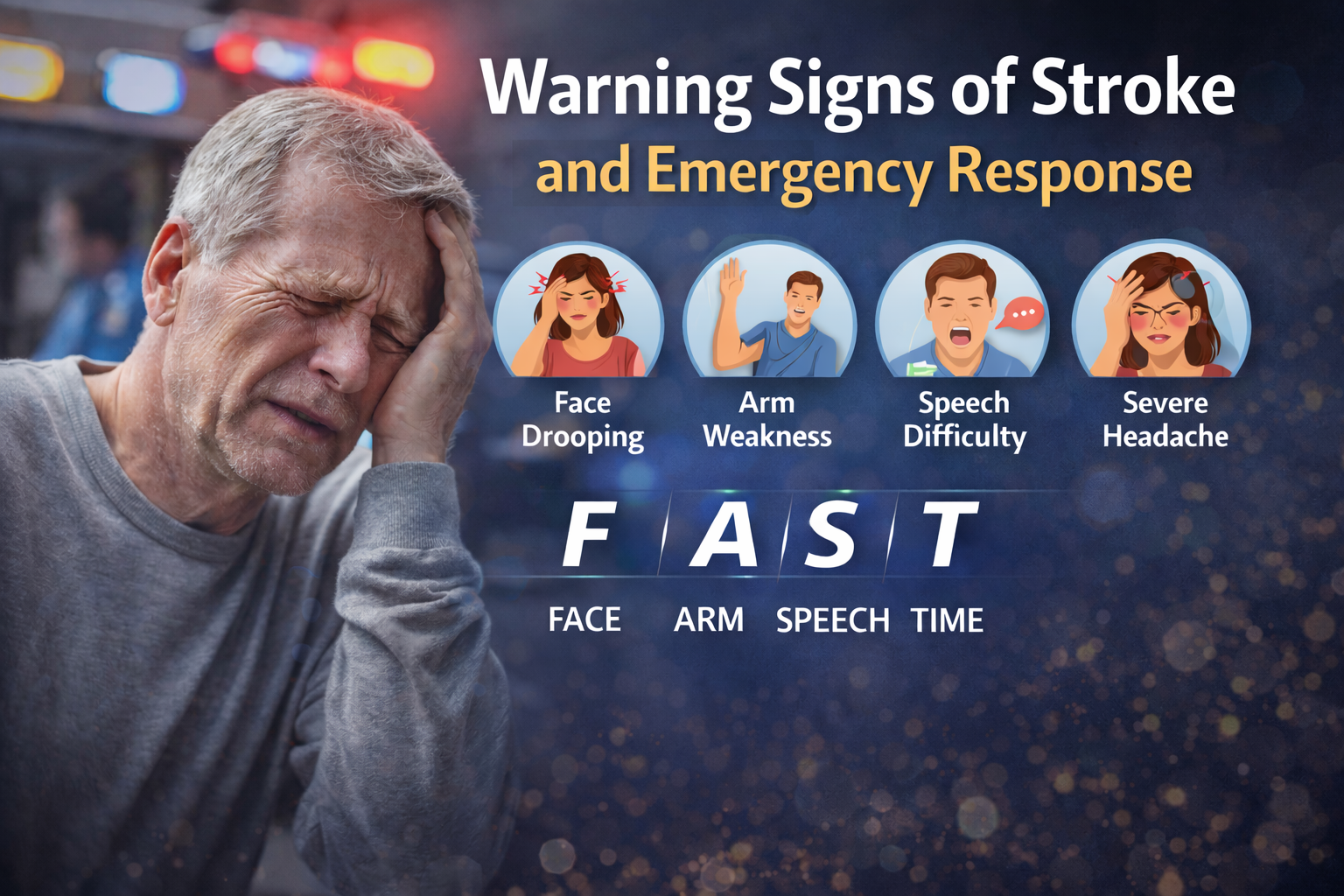
A helpful way to remember stroke symptoms is the FAST method:
F – Face Drooping
Ask the person to smile. Does one side of the face droop?
A – Arm Weakness
Ask them to raise both arms. Does one arm drift downward?
S – Speech Difficulty
Ask them to repeat a simple sentence. Is their speech slurred or strange?
T – Time to Call Emergency Services
If you notice any of these signs, call emergency services immediately.
Time lost is brain lost.
Risk Factors That Increase Stroke Chances
Certain conditions raise the risk of stroke. Understanding them can help with prevention.
High Blood Pressure
This is the leading risk factor. Uncontrolled blood pressure damages blood vessels over time
Diabetes
High blood sugar can harm blood vessels and increase clot formation.
Smoking
Smoking narrows blood vessels and raises stroke risk significantly.
Heart Disease
Irregular heart rhythms and heart conditions can lead to blood clots.
Obesity and Sedentary Lifestyle
Lack of physical activity and poor diet contribute to stroke risk.
What to Do During a Stroke Emergency
Knowing how to respond quickly is critical.
Call Emergency Services Immediately
Do not wait to see if symptoms improve. Call emergency services right away. Even a few minutes can make a huge difference.
Note the Time Symptoms Started
Medical teams need to know when symptoms began. Some treatments are only effective within a specific time window.
Keep the Person Safe and Comfortable
Have the person sit or lie down. Loosen tight clothing and ensure they can breathe easily.
Do Not Give Food or Drink
Swallowing may be impaired during a stroke. Giving food or water can cause choking.
Stay Calm and Reassuring
Your calm presence can reduce panic and stress for the person experiencing symptoms.
Medical Treatment After Arrival at the Hospital
Once at the hospital, doctors act quickly. Imaging tests such as CT scans help determine the type of stroke. Treatment may include:
-
Clot-dissolving medications for ischemic stroke
-
Surgical procedures in some cases
-
Intensive monitoring and supportive care
Early treatment improves outcomes dramatically.
Recovery and Rehabilitation
Stroke recovery varies from person to person. Rehabilitation may involve:
-
Physical therapy to regain movement
-
Speech therapy to restore communication
-
Occupational therapy for daily skills
-
The brain has a remarkable ability to adapt, and many people make significant recoveries with proper support.
Preventing Future Strokes
Prevention is always better than cure. Steps to reduce stroke risk include:
-
Managing blood pressure
-
Controlling diabetes
-
Quitting smoking
-
Eating a balanced diet
-
Exercising regularly
-
Maintaining a healthy weight
Small lifestyle changes can create powerful protection.
Conclusion
A stroke is a race against time. Recognizing warning signs and acting immediately can save lives and preserve brain function. Sudden weakness, speech difficulties, vision problems, and severe headaches should never be ignored. Using the FAST method makes identification easier and encourages rapid response. With early intervention and proper medical care, many stroke survivors go on to live full and meaningful lives. Awareness is our strongest defense.
FAQs
1. Can stroke symptoms go away on their own?
Sometimes symptoms may briefly disappear in a transient ischemic attack (TIA), but this is a serious warning sign and requires immediate medical attention.2. How quickly should I act if I suspect a stroke?
Immediately. Call emergency services at the first sign of symptoms. Do not wait. -
