Introduction to Brain Tumors
Brain health is something we often take for granted—until something feels off. A brain tumor, whether benign or malignant, can quietly affect how we think, feel, and function. The early signs of a brain tumor are sometimes subtle, masquerading as everyday health complaints. But what if those small signals are your body’s alarm system? We should never ignore persistent or unusual symptoms, especially when they involve the brain. Early detection can dramatically improve treatment outcomes and quality of life.
What Is a Brain Tumor?
A brain tumor is an abnormal growth of cells within the brain or surrounding tissues. These tumors can be primary (originating in the brain) or secondary (spreading from other parts of the body). Think of the brain as a finely tuned orchestra—when a tumor disrupts even one section, the entire performance can falter. Symptoms depend on the tumor’s size, type, and location.
Why Early Detection Matters
Detecting a brain tumor early can be life-saving. When we identify warning signs quickly, treatment options such as surgery, radiation, or targeted therapy are often more effective. Early diagnosis may also reduce complications and improve recovery rates. Ignoring symptoms is like ignoring a crack in a dam—it may seem small at first, but the consequences can grow rapidly.
Understanding How Brain Tumors Affect the Body
Brain tumors interfere with normal brain activity by pressing on tissues, increasing pressure inside the skull, or disrupting neural pathways. Because the brain controls everything from movement to emotions, even minor disturbances can create noticeable symptoms.
Impact on Brain Function
Depending on the tumor’s location, it may affect memory, motor skills, vision, or speech. For example, a tumor in the frontal lobe may change personality, while one in the cerebellum can impair balance. These effects are not random—they follow the brain’s functional map.
Common Risk Factors
While many brain tumors develop without a clear cause, certain factors may increase risk. These include genetic predisposition, exposure to radiation, and a weakened immune system. However, it’s important to remember that anyone can develop a brain tumor, even without known risk factors.
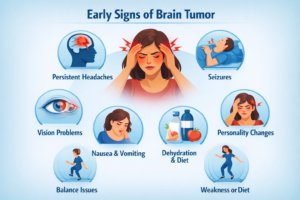
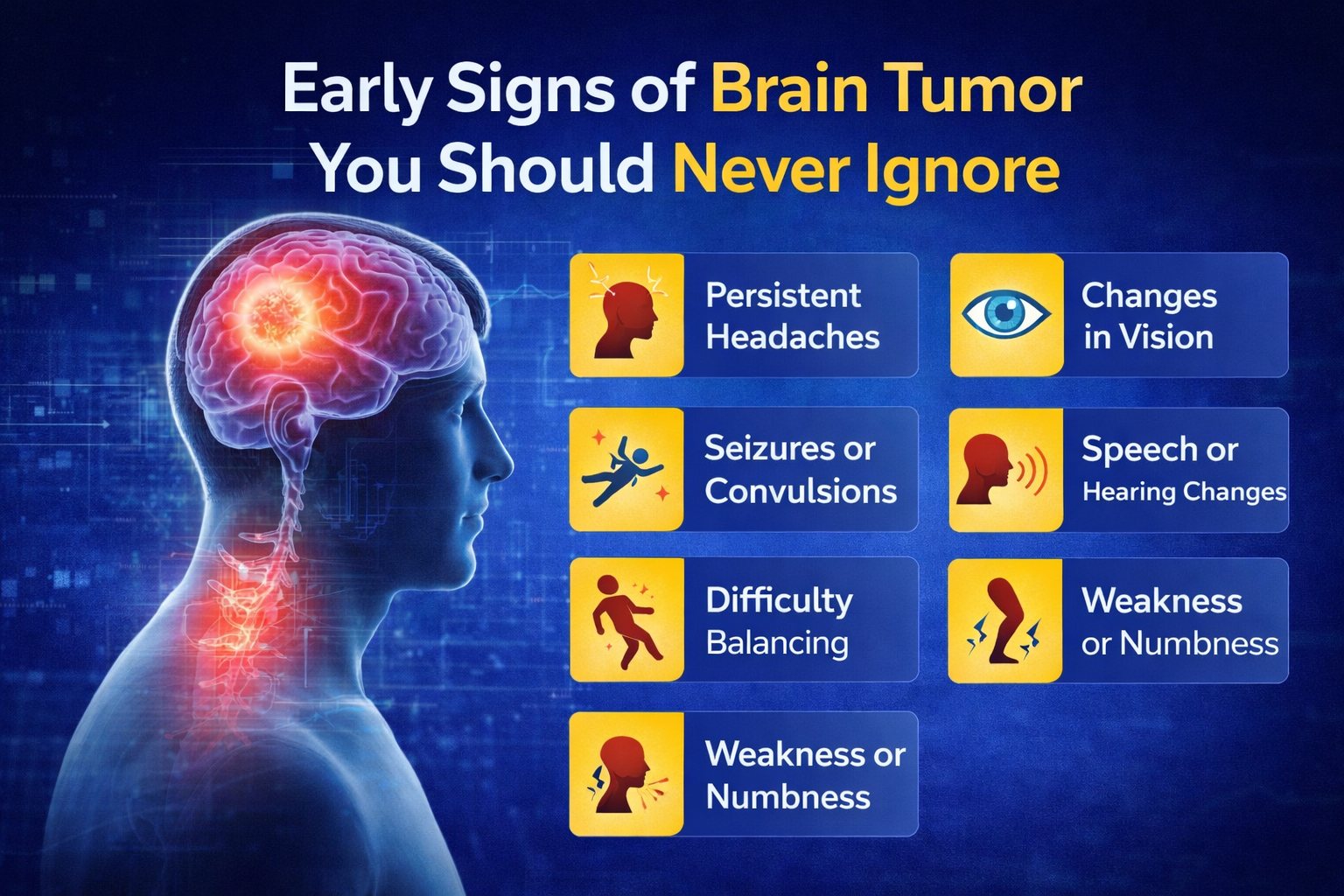
Persistent Headaches:
A Key Warning Sign
Headaches are common, but tumor-related headaches have distinct patterns. They often worsen over time, occur more frequently in the morning, or intensify with coughing or physical strain. If a headache feels different from your usual pattern, we should pay attention.
How Tumor Headaches Differ From Regular Headaches
Unlike tension headaches or migraines, brain tumor headaches tend to be persistent and resistant to standard pain relief. They may feel like constant pressure inside the skull, as if the brain is pushing against its boundaries.
Unexplained Nausea and Vomiting
Frequent nausea or vomiting—especially in the morning without digestive illness—can signal increased intracranial pressure. When paired with headaches, this symptom deserves immediate medical evaluation.
Vision Problems and Changes
The brain processes visual information, so tumors can easily affect eyesight. Sudden or progressive visual disturbances should never be ignored.
Blurred or Double Vision
Blurry or double vision can occur when a tumor presses on the optic nerves. Everyday tasks like reading or driving may suddenly become challenging.
Loss of Peripheral Vision
Some individuals experience tunnel vision, where side vision gradually fades. This subtle change may go unnoticed until it interferes with daily activities.
Seizures Without Prior History
A first-time seizure in an adult is a major red flag. Brain tumors can disrupt electrical signals, triggering seizures that range from mild twitching to full convulsions. Immediate medical attention is essential.
Balance and Coordination Issues
The cerebellum controls coordination and movement. When affected, simple actions like walking in a straight line may feel like navigating a rocking boat.
Difficulty Walking
Stumbling, clumsiness, or trouble with fine motor skills can indicate neurological disruption.
Dizziness and Vertigo
Persistent dizziness or a spinning sensation may accompany coordination problems, signaling deeper neurological issues.
Speech and Hearing Problems
Slurred speech, difficulty finding words, or hearing loss can result from tumors affecting communication centers. Conversations may suddenly require extra effort.
Weakness or Numbness in Limbs
Gradual weakness or numbness on one side of the body is another warning sign. It may feel like pins and needles or reduced strength during routine tasks.
When to See a Doctor Immediately
If multiple symptoms appear together—such as headaches with vision changes or seizures—we should seek urgent medical care. Trusting our instincts can make a critical difference.
Diagnostic Tests for Brain Tumors
Doctors use imaging tools like MRI and CT scans to detect abnormalities. Neurological exams and biopsies may follow to confirm diagnosis and guide treatment. Early testing improves the chances of successful intervention.
Prevention and Risk Reduction Tips
While not all brain tumors are preventable, maintaining overall health helps. We should minimize unnecessary radiation exposure, follow a balanced diet, exercise regularly, and attend routine medical checkups. Awareness remains our strongest defense.
Conclusion
The early signs of a brain tumor are often subtle whispers before they become loud alarms. Persistent headaches, vision changes, seizures, and behavioral shifts are signals we should never ignore. By recognizing symptoms early and seeking timely medical care, we empower ourselves to act decisively. Our brains are extraordinary organs—protecting them starts with listening carefully to what they tell us.
FAQs
1. Can a brain tumor cause symptoms that come and go? Yes, symptoms may fluctuate depending on pressure changes and tumor growth, which can make early detection challenging.
2. Are all brain tumor headaches severe? Not always. Some are mild but persistent and different from usual headaches.
3. Can children show different early signs than adults? Yes, children may show developmental delays, irritability, or changes in school performance.
4. How quickly should we act if symptoms appear? We should seek medical evaluation as soon as unusual neurological symptoms persist or worsen.
5. Are benign brain tumors dangerous? Even benign tumors can be serious if they press on vital brain structures and require medical treatment.